
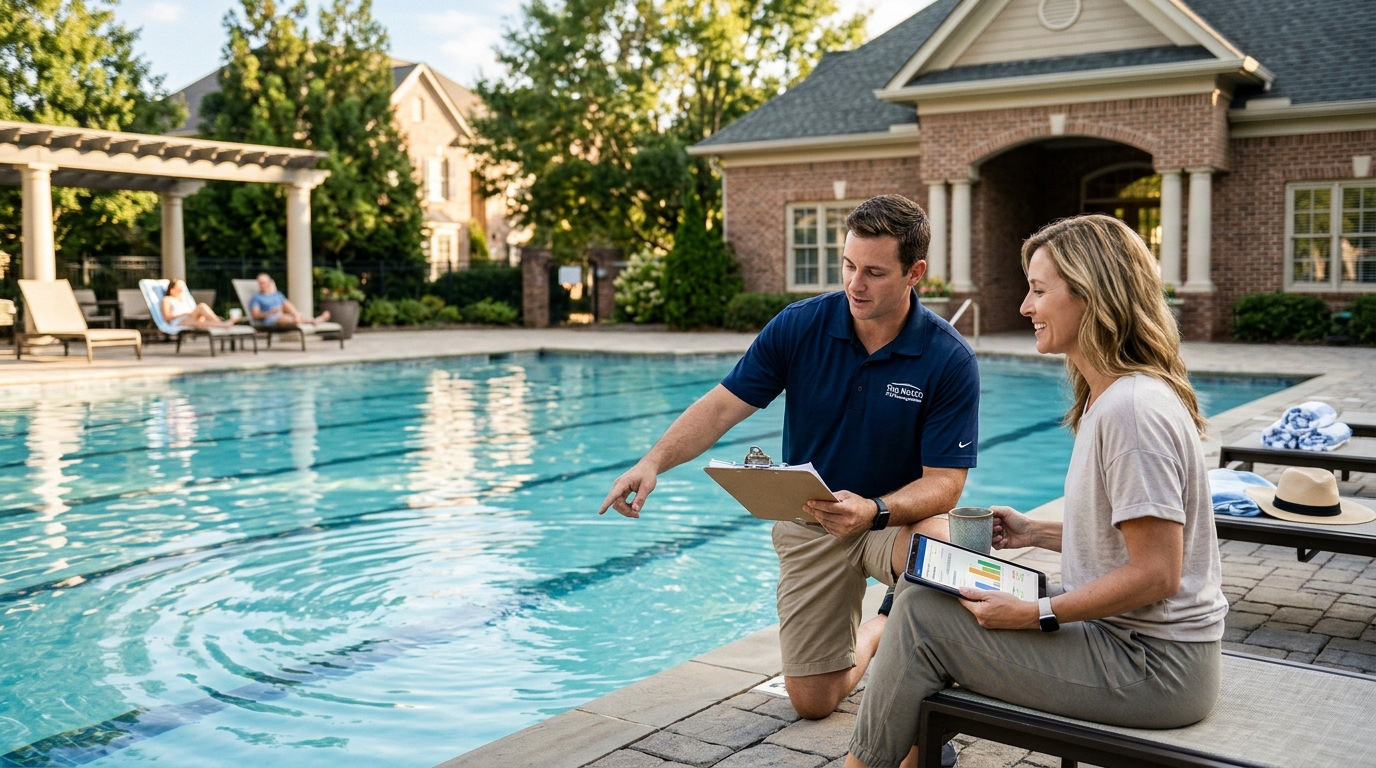
Georgia pool inspections are split between state and local authorities. The Georgia Department of Public Health (DPH) sets the baseline safety standards, while county health departments handle local enforcement and permit issuance. For HOAs in North Atlanta, understanding this split is critical for compliance. Top Notch Pool Management helps community associations navigate both layers of regulation to ensure your pool passes every check.
State Level: Georgia Department of Public Health
The Georgia Department of Public Health is the primary regulatory body for public swimming pools in the state. State inspection is a formal audit of your facility against the Georgia Public Health Standards. These standards cover critical safety elements like barrier fencing, chemical storage, and water quality testing protocols. When a state inspector visits, they are verifying that your pool meets the minimum legal requirements for public use. Failure to pass a state inspection can result in fines or a mandatory closure order until issues are resolved.
Key State Inspection Criteria
- Barrier and gate compliance to prevent unauthorized access.
- Chemical storage and handling safety protocols.
- Water quality testing logs and equipment calibration.
- Signage and emergency response plans.
State inspections are often triggered by new construction, major renovations, or periodic audits. They are less frequent than local checks but carry significant legal weight. Your pool operator must be certified, and the facility must maintain specific records that the state can review at any time.
County Level: Local Health Department Enforcement
County health departments, such as the Fulton County Department of Public Health or Forsyth County Health Department, act as the local enforcement arm. County inspection is a routine, often unannounced, check to ensure ongoing compliance with state standards and local ordinances. These inspections are more frequent and focus on day-to-day operations. A county inspector will check if your water chemistry is currently balanced, if your filters are clean, and if your staff is following proper procedures. They also handle the initial permitting process for new pools or significant changes to existing ones.
Local Enforcement Focus
- Current water chemistry levels (chlorine, pH, alkalinity).
- Physical cleanliness of the pool and surrounding deck.
- Operational logs and maintenance records.
- Local permit status and zoning compliance.
County inspections are the first line of defense against minor issues becoming major violations. They are more about operational hygiene than structural safety. If a county inspector finds a problem, they will issue a notice of violation that must be corrected within a specific timeframe, often 24 to 72 hours.
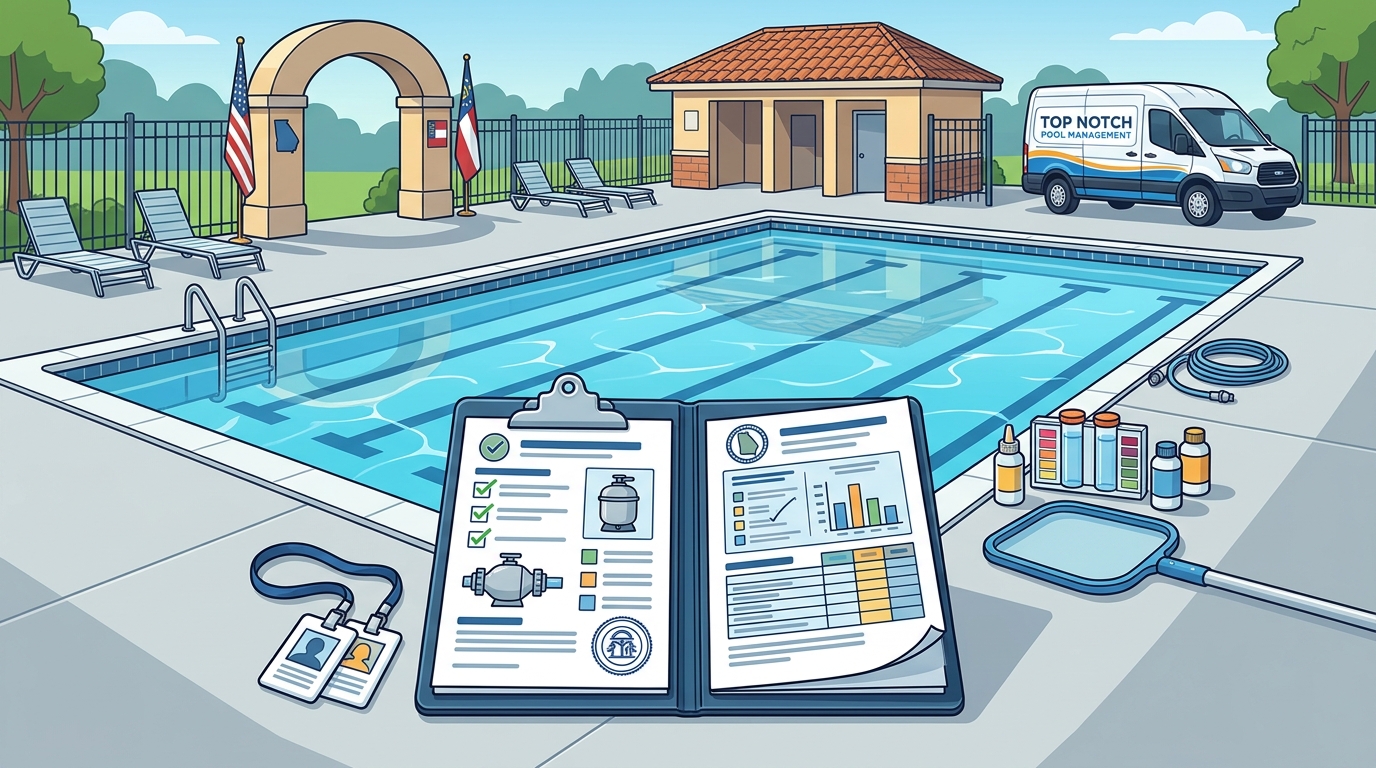
Comparison: State vs County Inspection Requirements
| Criteria | State (Georgia DPH) | County (Local Health Dept) |
|---|---|---|
| Primary Focus | Structural safety and baseline standards | Operational hygiene and daily compliance |
| Frequency | Periodic or event-driven (new build/renovation) | Routine and often unannounced |
| Key Checks | Barriers, chemical storage, emergency plans | Water chemistry, cleanliness, logs |
| Violation Consequence | Fines, closure orders, legal action | Notices of violation, mandatory correction |
| Permitting Role | Final approval for public use | Initial permit issuance and local zoning |
Choose State Compliance if...
Choose state-focused compliance strategies if you are building a new pool, undergoing major renovations, or preparing for a formal state audit. This is also the right path if your HOA is facing a legal challenge regarding pool safety or if you are seeking certification for your pool operator. State compliance is about proving your facility is structurally sound and legally safe for public use. It requires long-term planning and documentation.
Choose County Compliance if...
Choose county-focused compliance if you are managing daily operations and want to avoid routine violations. This is the path for established pools that need to maintain clean water and proper logs. County compliance is about consistency and attention to detail. It ensures that your pool is ready for an unannounced visit at any time. For most HOAs, county compliance is the daily reality, while state compliance is the annual or project-based goal.
Frequently Asked Questions
Does the state inspect HOA pools in Georgia?
Yes, the Georgia Department of Public Health inspects public swimming pools, which includes HOA community pools. These inspections verify compliance with state safety standards and barrier requirements.
How often does the county health department inspect pools?
County health departments typically conduct routine inspections on a periodic basis, often quarterly or semi-annually, but they may also perform unannounced checks to ensure ongoing operational compliance.
What happens if I fail a state inspection?
Failing a state inspection can result in fines, a mandatory closure order, or legal action. You must correct the violations within a specified timeframe to regain compliance and reopen the pool.
Can I use the same records for both state and county inspections?
Yes, maintaining comprehensive logs of water chemistry, maintenance, and safety checks satisfies both state and county requirements. Consistent record-keeping is the most efficient way to pass both types of inspections.
Who is responsible for pool inspections in an HOA?
The HOA board is responsible for ensuring the pool is inspected and compliant. They typically hire a certified pool operator or management company to handle daily maintenance and coordinate with inspectors.
Conclusion
Understanding the difference between state and county pool inspections is essential for any HOA in Georgia. State inspections focus on structural safety and legal compliance, while county inspections ensure daily operational hygiene. Top Notch Pool Management provides certified pool care and compliance support for HOAs in Alpharetta and the North Atlanta region. To ensure your community pool passes both state and county checks, for a comprehensive inspection and maintenance plan.