
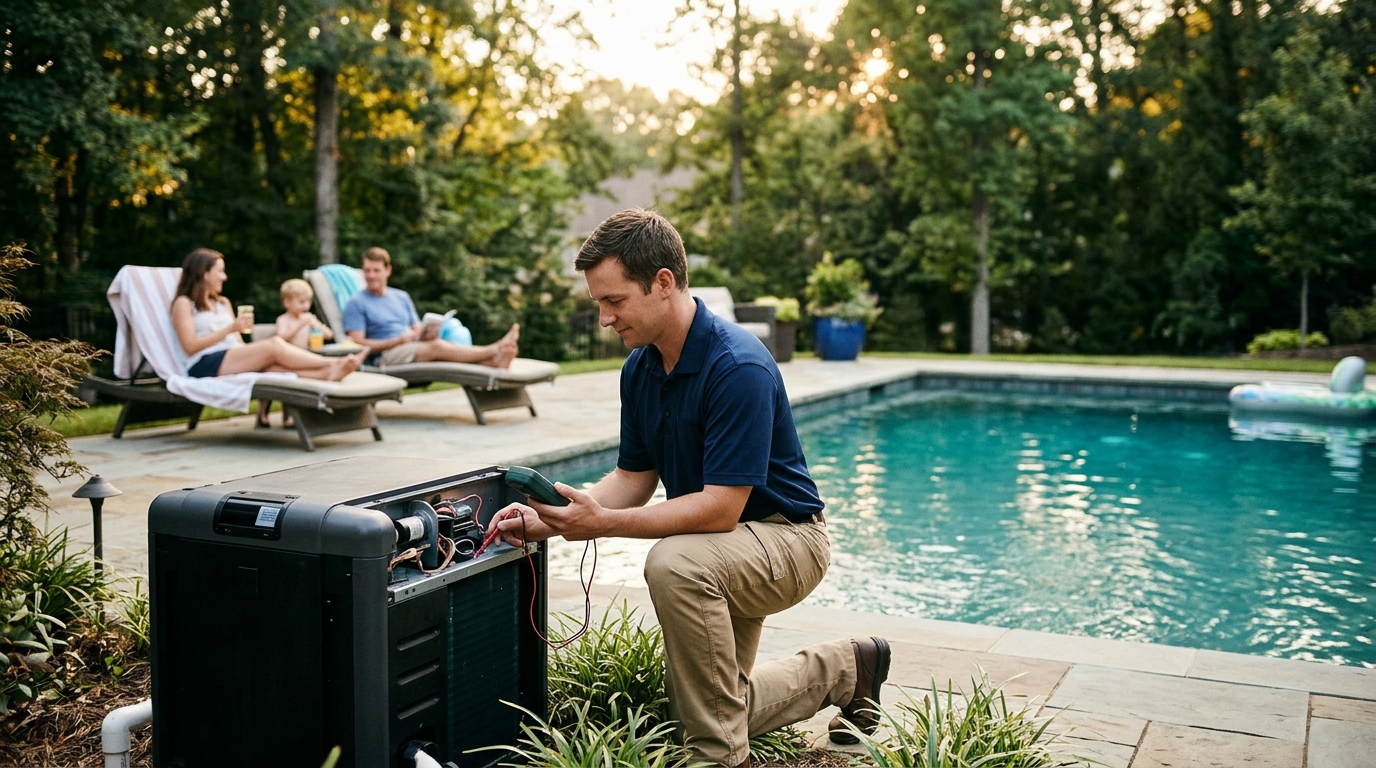
Pool heater repair is needed when your system fails to reach the set temperature, makes unusual noises, or shows visible signs of corrosion and leaks. Ignoring these warning signs can lead to complete system failure, higher energy bills, and unsafe swimming conditions. Top Notch Pool Management provides expert diagnostics to identify these issues before they escalate into costly replacements.
Temperature Inconsistencies and Failure to Heat
The most obvious sign that your pool heater needs professional repair is a failure to reach the desired temperature. If the water remains cool despite the heater running, the problem may lie in the burner, gas valve, or electronic controls. In gas heaters, a pilot light that will not stay lit or a burner that sputters indicates a need for immediate inspection. Electric heat pumps may struggle to heat water if the refrigerant levels are low or the compressor is failing. These temperature inconsistencies are not just uncomfortable; they signal that the core heating mechanism is compromised.
For example, a homeowner in Alpharetta might notice that their pool takes twice as long to heat up in the morning. This gradual decline in efficiency is a classic indicator of a failing heat exchanger or a clogged filter that restricts water flow. When the heater cannot move water efficiently, it cannot transfer heat effectively. Recognizing this early prevents the system from overheating and damaging internal components.
Unusual Noises and Vibration Patterns
Pool heater repair is often required when the unit begins to make sounds it has never made before. A healthy heater operates with a consistent, low hum. Grinding, squealing, or rattling noises suggest mechanical failure. In gas heaters, a loud popping sound when the unit shuts off can indicate a cracked heat exchanger. In electric heat pumps, a high-pitched squeal often points to a failing fan motor or a loose belt. These noises are the system's way of communicating distress.
Vibration is another critical indicator. If you can feel the heater shaking more than usual, it may be due to a loose mounting bracket or a failing pump impeller. Excessive vibration can loosen connections over time, leading to leaks or electrical shorts. Top Notch Pool Management technicians listen for these specific acoustic cues during service visits. By addressing vibration and noise early, you protect the structural integrity of the unit and prevent sudden breakdowns during peak swimming season.
Visible Leaks and Corrosion
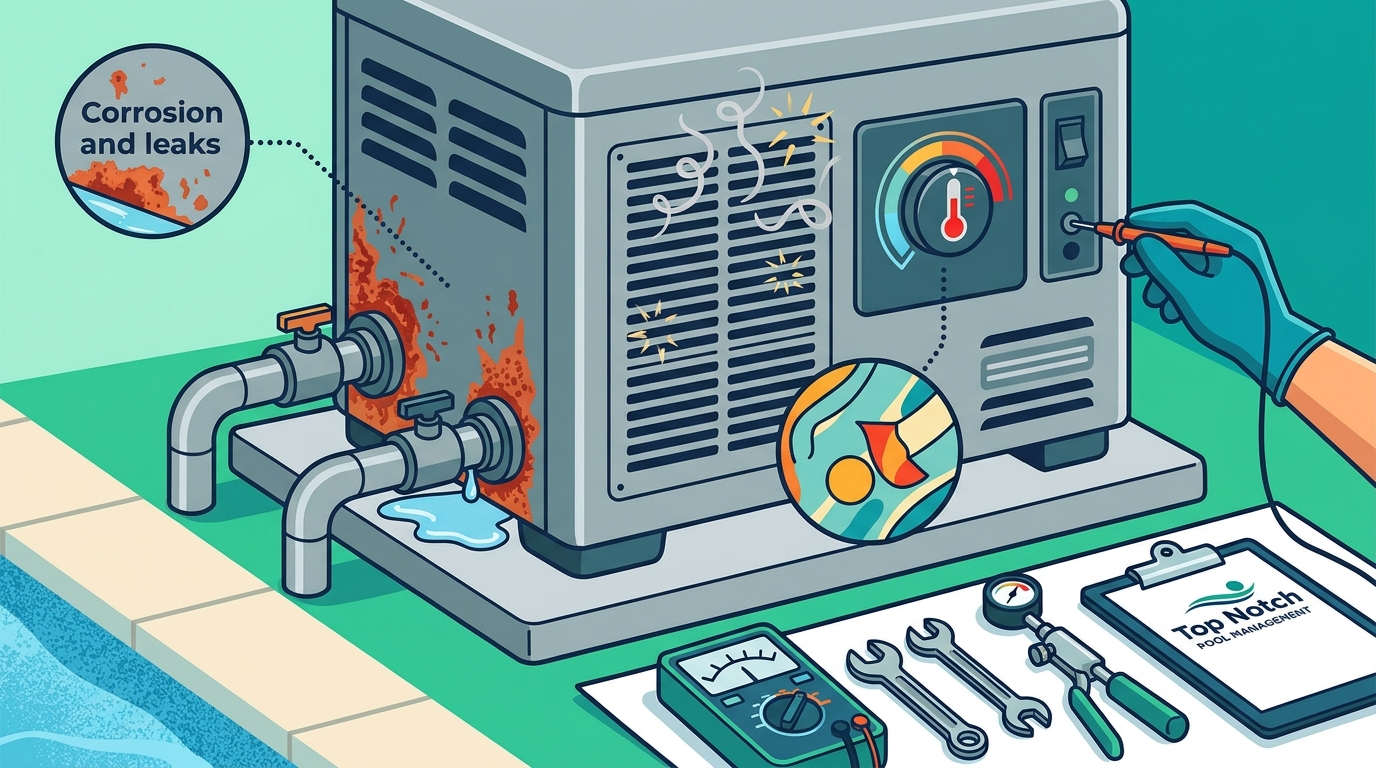
Water leaks around the heater are a definitive sign that professional repair is necessary. Puddles of water near the base of the unit or wet spots on the surrounding deck indicate a breach in the plumbing or the heat exchanger. Corrosion on the exterior of the heater, particularly around the gas connections or electrical panels, is equally concerning. Rust can weaken metal components and create fire hazards in gas systems. If you see white crusty deposits or greenish stains, your water chemistry may be too aggressive, accelerating the wear on your heater.
Consider a scenario where a homeowner notices a small drip from the pressure relief valve. While this might seem minor, it often signals that the internal pressure is too high. This condition can stress the heat exchanger and lead to a catastrophic failure. Ignoring visible corrosion or leaks is dangerous. It not only wastes water but also poses a safety risk to your family. Certified technicians can identify the source of the leak and repair it safely, ensuring your pool remains a safe environment for swimming.
Electrical Issues and Tripped Breakers
Additionally, if the heater's control panel displays error codes or if the lights flicker, there is likely an issue with the electronic controls. These boards manage the entire operation of the heater, including ignition and temperature regulation. A malfunctioning board can cause the heater to shut down unexpectedly or fail to ignite. Top Notch Pool Management specializes in diagnosing these electrical faults. We use advanced diagnostic tools to trace the issue to the specific component, whether it is a sensor, a relay, or the main control board. Prompt attention to electrical issues prevents fire risks and ensures reliable operation.
High Energy Bills and Reduced Efficiency
A sudden spike in your energy bills is a subtle but significant sign that your pool heater needs repair. If your gas or electric usage has increased without a change in how often you use the pool, your heater is likely working harder than it should. This inefficiency can be caused by a dirty filter, a failing pump, or a degraded heat exchanger. When the system is inefficient, it runs longer to achieve the same temperature, driving up your costs.
For instance, a gas heater with a clogged burner will consume more fuel to produce the same amount of heat. An electric heat pump with low refrigerant will run continuously without reaching the set temperature. Monitoring your utility bills is an easy way to track your heater's health. If you notice a 20% or greater increase in energy costs, it is time to schedule a professional inspection. Efficient operation saves money and extends the life of your equipment. By addressing efficiency issues early, you ensure that your pool remains a cost-effective luxury rather than a financial burden.
Key Takeaways
- Temperature inconsistencies, such as failure to heat or slow warming, are primary indicators of heater malfunction.
- Unusual noises like grinding, squealing, or popping suggest mechanical or structural failure.
- Visible leaks and corrosion pose safety risks and require immediate professional attention.
- Frequent tripping of breakers or GFCI outlets indicates electrical faults that must be addressed to prevent shock hazards.
- Unexplained increases in energy bills signal reduced efficiency and potential component wear.
- Regular maintenance by certified technicians can prevent minor issues from becoming major repairs.
Frequently Asked Questions
How often should I have my pool heater inspected?
It is recommended to have your pool heater inspected at least once a year, ideally before the start of the swimming season. Regular inspections help identify wear and tear before it leads to a breakdown.
Can I repair a pool heater myself?
While you can perform basic maintenance like cleaning filters, most heater repairs require specialized tools and knowledge. Electrical and gas work should always be handled by a certified professional to ensure safety and compliance with local codes.
What is the average lifespan of a pool heater?
With proper maintenance, a gas pool heater typically lasts 8 to 12 years, while an electric heat pump can last 10 to 15 years. Regular servicing can extend this lifespan significantly.
Why is my pool heater tripping the breaker?
A tripping breaker usually indicates a short circuit or an overloaded component. This could be due to a failing motor, damaged wiring, or a control board issue. Stop using the heater and contact a professional for diagnosis.
How much does pool heater repair cost?
Repair costs vary depending on the issue. Minor fixes like replacing a sensor or cleaning a burner may be relatively inexpensive, while major repairs involving the heat exchanger or compressor can be more costly. A professional diagnosis will provide an accurate estimate.
Conclusion
Recognizing the signs of pool heater trouble is essential for maintaining a safe and enjoyable swimming environment. Whether you notice temperature issues, unusual noises, leaks, or electrical faults, early intervention is key. Top Notch Pool Management offers expert pool heater repair services in Alpharetta and the surrounding North Atlanta region. Our certified technicians are equipped to diagnose and fix a wide range of heater issues, ensuring your pool stays warm and ready for use. To schedule a diagnostic visit or learn more about our services, today.