
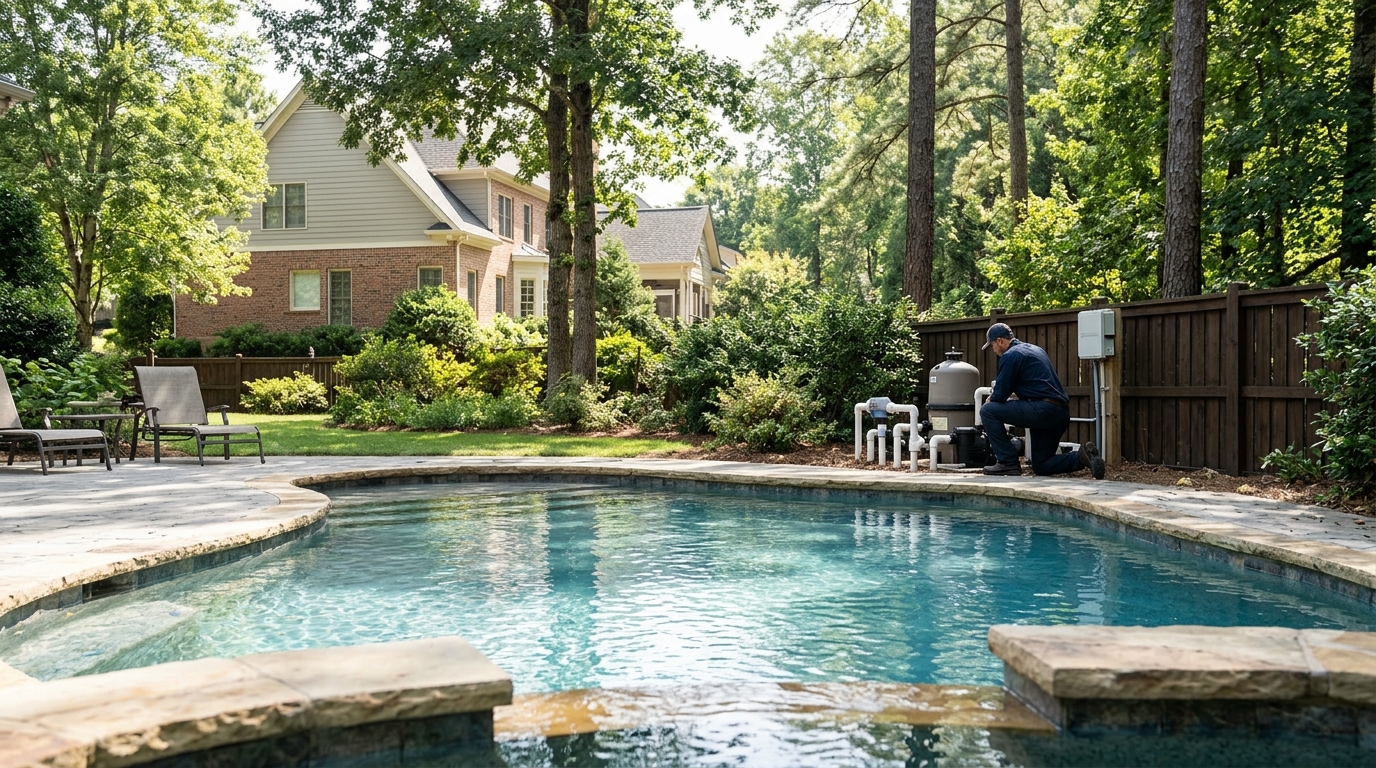
Salt chlorine generators convert dissolved salt into chlorine through electrolysis, providing a continuous and gentle sanitization method for Alpharetta pools. While the initial installation cost is higher than traditional systems, the reduced chemical handling and consistent water quality often make them a worthwhile long-term investment for local homeowners.
The Electrolysis Process Explained
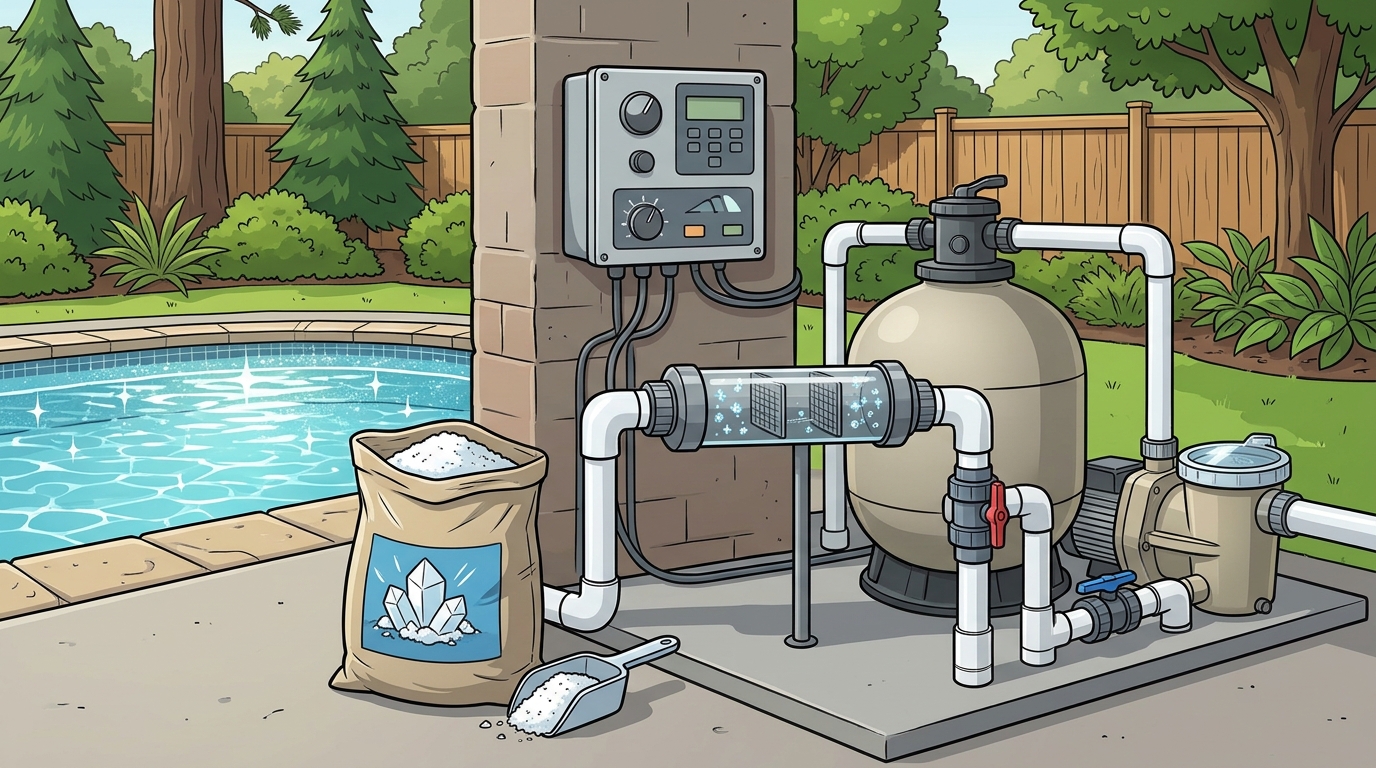
A salt chlorine generator is a device that uses electricity to break down salt into chlorine. The pool's circulation system pushes water through a generator cell containing two electrodes. When an electric current passes through the saltwater, it triggers a chemical reaction known as electrolysis. This process converts sodium chloride into sodium hypochlorite, which is the active form of chlorine that sanitizes the water.
Once the water leaves the cell, the chlorine neutralizes contaminants like bacteria and algae. As the water circulates back through the pool, the chlorine naturally reverts to salt. This cycle allows the pool to maintain a steady level of sanitizer without the need for constant manual chemical additions. In the humid climate of North Georgia, this continuous production helps keep water balanced despite frequent rain and heat.
Why Alpharetta Pools Benefit from Salt Systems
The local environment in Alpharetta presents specific challenges for pool owners. Heavy pollen seasons and warm summers can rapidly deplete traditional chlorine levels. Salt systems are particularly effective in these conditions because they produce chlorine on demand. The generator adjusts its output based on the pool's needs, ensuring that the sanitizer level remains consistent even when bather load or weather changes.
Homeowners in areas like Windward or Avalon often find that saltwater feels softer on the skin and eyes. This is because the water lacks the harsh chemical odor associated with high doses of liquid chlorine. For families who use their pools frequently, this comfort factor is a significant advantage. The consistent sanitization also reduces the frequency of shocking the pool, which can be a time-consuming task during peak summer months.
Maintenance and Upkeep Requirements
While salt systems reduce the need for chemical storage, they introduce specific maintenance tasks. The core component, the generator cell, requires periodic cleaning to remove calcium buildup. This mineral scale forms on the cell plates and can reduce efficiency if not addressed. Most owners clean the cell every few months using a mild acid solution, a process that takes less than an hour.
Additionally, the salt level in the pool must be monitored regularly. If the salt concentration drops too low, the generator cannot produce enough chlorine. If it is too high, it can cause corrosion to metal fixtures. Top Notch Pool Management technicians include salt level checks in their weekly service visits to ensure the system operates within the optimal range. This proactive approach prevents equipment strain and maintains water clarity.
Cost Considerations and Long-Term Value
The upfront cost of a salt chlorine generator is higher than a standard chlorinator. However, the long-term savings on chemical purchases can offset this initial investment. Traditional pool owners often spend significant amounts on liquid chlorine, tablets, and stabilizers. Salt system owners primarily pay for electricity and occasional cell replacements. Over a period of five to ten years, the total cost of ownership for a salt system is often lower.
It is important to consider the lifespan of the generator cell. Cells typically last between three and five years, depending on usage and water chemistry. Replacing a cell is a manageable expense compared to the cost of a full pool renovation. For homeowners in Alpharetta, the investment in a salt system aligns with the goal of protecting the pool's structural integrity and reducing long-term maintenance headaches.
Professional Support for Salt Systems
Top Notch Pool Management provides specialized care for saltwater pools in the Alpharetta area. Our CPO-certified team understands the unique demands of salt systems in the Georgia climate. We handle everything from initial installation to routine cell cleaning and chemical balancing. By partnering with a local expert, homeowners can enjoy the benefits of saltwater without the stress of complex maintenance. To discuss how a salt system might fit your pool, contact our team for a consultation.
Key Takeaways
- Salt chlorine generators use electrolysis to convert salt into chlorine continuously.
- The system is particularly effective in Alpharetta's warm and humid climate.
- Regular cell cleaning and salt level monitoring are essential for optimal performance.
- Long-term chemical savings often offset the higher initial installation cost.
- Professional maintenance ensures the system operates efficiently and safely.
- Saltwater pools offer a softer swimming experience for families.
Frequently Asked Questions
How often do I need to clean a salt chlorine generator cell?
Most owners should clean their generator cell every three to six months. The frequency depends on water hardness and usage. Cleaning involves soaking the cell in a mild acid solution to remove calcium scale. This simple task ensures the cell continues to produce chlorine efficiently.
Do salt pools still require chemical balancing?
Yes, salt pools still require regular chemical balancing. While the generator produces chlorine, other parameters like pH, alkalinity, and calcium hardness must be maintained. Proper balance protects the generator cell and ensures the water is comfortable for swimmers. Weekly testing is recommended to keep these levels in check.
Is a salt system better for the environment?
Salt systems can be more environmentally friendly because they reduce the need for transporting and storing harsh chemicals. The chlorine produced is used immediately in the pool and breaks down naturally. This minimizes the risk of chemical spills and reduces the overall chemical footprint of pool ownership.
Can I switch from a traditional pool to a salt system?
Yes, most traditional pools can be converted to salt systems. The process involves installing a salt chlorine generator and adjusting the salt level in the water. It is important to ensure that the pool's plumbing and equipment are compatible with the new system. A professional assessment can help determine the best setup for your specific pool.
How much does it cost to maintain a salt system?
Maintenance costs for a salt system are generally lower than for traditional pools. The primary expenses are electricity for the generator and occasional cell replacements. Chemical costs are significantly reduced because you are not buying large quantities of chlorine. The exact cost depends on the size of the pool and local utility rates.