
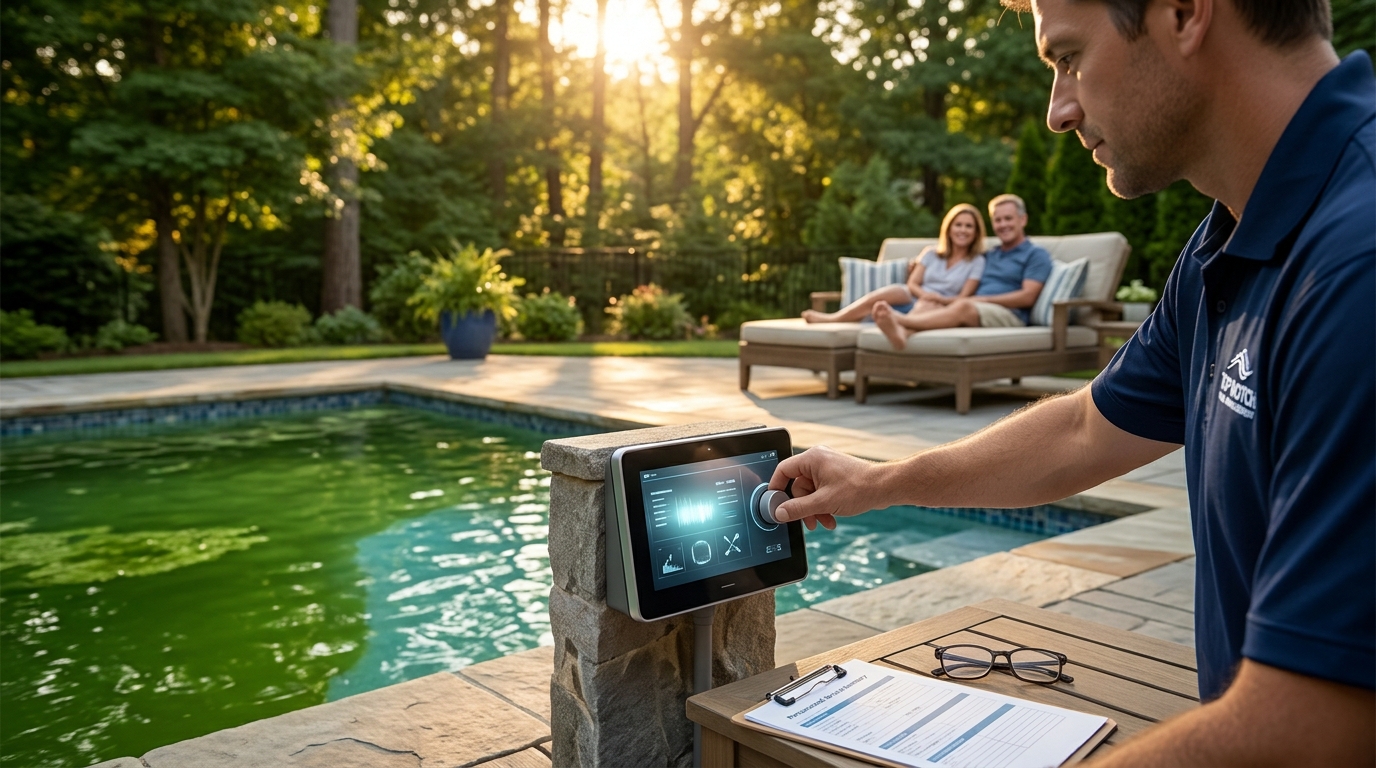
Green pool water is more than a cosmetic issue; it is a sign of severe chemical imbalance and equipment strain. When algae takes over, your filtration system works overtime, and your heater struggles to maintain temperature. Top Notch Pool Management in Alpharetta, GA, specializes in restoring water clarity and optimizing system efficiency to lower your monthly utility costs. By addressing the root causes of green water, you protect your equipment and reduce the energy required to keep your pool safe and swimmable. according to Assessing the Costs
1. Reduced Filtration System Strain
Clear water allows filters to operate at optimal efficiency, lowering pump energy consumption. When a pool turns green, the filtration system must work harder to trap suspended algae and debris. This increased load forces the pump to run longer cycles or at higher speeds, directly increasing electricity usage. Restoring water clarity reduces the workload on your pump, allowing it to run on standard cycles and save energy.
2. Improved Heat Exchanger Performance
Algae buildup on heat exchangers forces heaters to consume more energy to reach target temperatures. Biofilm and algae deposits act as insulators on the internal components of gas heaters and heat pumps. This insulation reduces heat transfer efficiency, meaning the unit burns more fuel or uses more electricity to heat the same volume of water. Professional cleaning removes these deposits, restoring the heater's original thermal efficiency.
3. Lower Chemical Consumption Costs
Correcting chemical balance reduces the volume of expensive treatments needed, indirectly lowering operational energy. While chemicals themselves are not energy, the process of shocking a green pool and balancing pH requires significant equipment runtime. Excessive chemical use can also corrode equipment, leading to premature failure and higher replacement costs. A balanced pool requires less aggressive treatment, reducing the energy spent on circulation and filtration during the correction phase.
4. Prevention of Pump Motor Burnout
Overworked pumps are prone to motor burnout, which is energy-intensive to repair and replace. Running a pump continuously to combat algae causes the motor to overheat. This thermal stress degrades motor components and can lead to complete failure. Replacing a burned-out motor is a major expense, and the energy wasted during the period of reduced efficiency adds to your bill. Preventive maintenance ensures the motor runs cool and efficient.
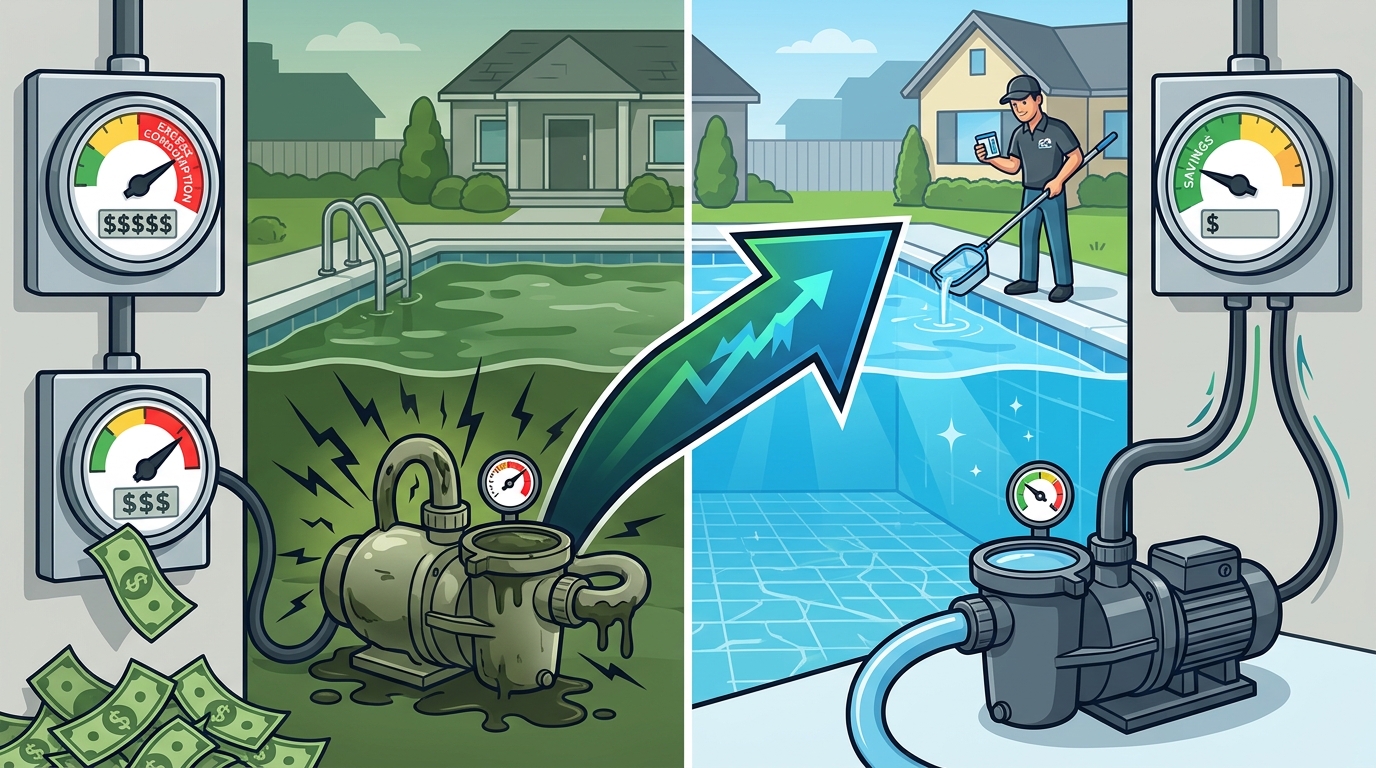
5. Enhanced Circulation Efficiency
Unobstructed plumbing and clear water improve water flow, reducing the energy needed for circulation. Algae and debris can clog pipes, skimmers, and return jets. This restriction increases pressure in the system, forcing the pump to work harder to move water. Clearing these blockages restores proper flow dynamics, allowing the system to circulate water with less resistance and lower energy input.
6. Extended Equipment Lifespan
Protecting equipment from chemical and thermal stress delays costly replacements and repairs. A green pool creates an acidic or corrosive environment that damages metal components and seals. This degradation leads to leaks and failures that require energy-intensive repairs. By maintaining a neutral, clear environment, you extend the life of your pump, heater, and filter, avoiding the energy and cost of frequent replacements.
7. Optimized Automation System Performance
Accurate sensor readings in a clear pool allow automation systems to operate efficiently. Smart pool controllers rely on sensors to monitor water quality and temperature. Algae and debris can coat sensors, leading to inaccurate readings and incorrect system adjustments. This can cause the system to run heaters or pumps unnecessarily. Clear water ensures sensors provide accurate data, allowing the automation system to optimize energy use based on actual conditions.
Choosing the Right Approach
When deciding how to address a green pool, consider the severity of the algae bloom and the condition of your equipment. For minor discoloration, a thorough cleaning and chemical adjustment may suffice. For persistent green water or equipment noise, professional intervention is necessary to prevent long-term energy waste. Top Notch Pool Management provides certified technicians who can diagnose and resolve these issues efficiently.
Frequently Asked Questions
How much can fixing a green pool reduce energy bills?
Restoring water clarity can reduce pump and heater energy consumption by 10% to 20% by eliminating the extra strain caused by algae and chemical imbalance.
Does algae buildup affect heat pump efficiency?
Yes, algae deposits on heat exchangers act as insulators, reducing heat transfer and forcing the heat pump to use more electricity to maintain water temperature.
How often should I check my pool for algae to save energy?
Weekly inspections are recommended to catch early signs of algae before they cause significant strain on your filtration and heating systems.
Can I fix a green pool myself to save on service costs?
While you can attempt basic cleaning, persistent green water often indicates equipment issues that require professional diagnosis to prevent further energy waste.
What is the most energy-intensive part of pool maintenance?
Heating and filtration are the most energy-intensive components, and both are negatively impacted by the chemical imbalance and debris associated with green water.