
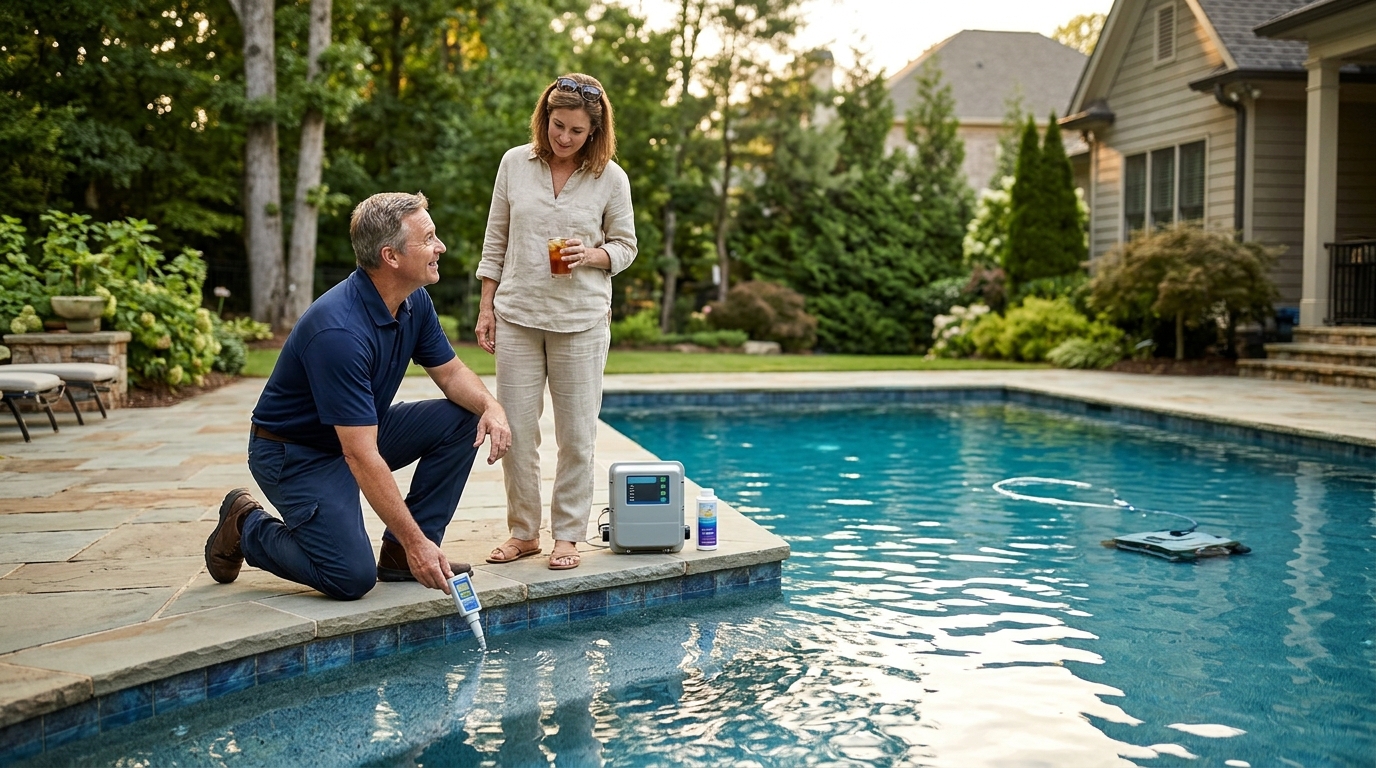
Chlorine pools require frequent manual pH adjustments because chlorine consumption drops as pH rises, while saltwater pools maintain stable chlorine levels but still need regular pH monitoring due to natural alkalinity shifts. Chlorine systems suit owners who prefer direct chemical control, whereas saltwater systems fit those seeking lower maintenance with automated chlorine generation. Top Notch Pool Management helps Alpharetta homeowners navigate these differences to keep water safe and clear.
Chlorine Pool pH Balancing
Chlorine pool pH balancing is the process of manually adjusting water acidity to maintain a range of 7.2 to 7.8. In traditional chlorine systems, the sanitizer is added directly to the water. As the water becomes more alkaline, the effectiveness of chlorine decreases significantly. This means that if your pH drifts upward, your chlorine level may drop even if you have added the correct amount of chemical. Homeowners often find themselves adding more chlorine to compensate for high pH, which can lead to chemical waste and potential skin irritation.
The primary strength of this system is its simplicity in understanding. You can test the water, see the pH, and add acid or base to correct it. However, the limit is the constant need for vigilance. In the hot Georgia climate, evaporation and bather load can shift pH rapidly. This requires frequent testing, often daily during peak summer months, to ensure the water remains balanced. This option suits homeowners who are comfortable with hands-on maintenance and want direct control over their chemical dosing.
Saltwater Pool pH Balancing
Saltwater pool pH balancing is the process of managing acidity in a system that generates chlorine from dissolved salt. Unlike traditional pools, saltwater systems use an electrolytic cell to convert salt into chlorine continuously. This method produces a steady supply of sanitizer, which helps stabilize the water. However, the electrolysis process can slightly raise the pH over time. Additionally, the salt itself does not buffer the water against pH changes, so external factors like rain, dust, and bather load still affect acidity.
The main advantage of saltwater systems is the reduction in chemical handling. You do not need to store or add liquid chlorine, which simplifies the routine. The limit is that the system does not automatically balance pH. Many owners mistakenly believe the salt cell handles all chemistry, but it only generates chlorine. If pH rises, the cell may work harder to produce the same amount of active chlorine, potentially shortening the cell's lifespan. This option suits homeowners who want a cleaner swimming experience and are willing to monitor pH levels without handling harsh chemicals.
Comparison of pH Balancing Requirements
| Criteria | Chlorine Pools | Saltwater Pools |
|---|---|---|
| pH Stability | Less stable; chlorine effectiveness drops as pH rises | More stable chlorine output, but pH can still drift |
| Chemical Handling | Requires storing and adding liquid or dry chlorine | No chlorine storage; salt is added periodically |
| Testing Frequency | Daily during peak season to catch rapid changes | 2-3 times per week to monitor drift |
| Equipment Impact | High pH can cause scaling on heaters and pipes | High pH reduces cell efficiency and lifespan |
| Swimmer Comfort | Can cause eye irritation if pH is high | Generally gentler on eyes and skin |
Choosing the Right System for Your Pool
Choose a chlorine system if you prefer a straightforward setup with lower initial equipment costs. This is ideal for owners who enjoy the technical aspect of pool care and want to manually adjust chemicals based on test results. It is also a good fit for pools that are used seasonally, as you can easily adjust the system for winterization.
Choose a saltwater system if you want to reduce the frequency of chemical purchases and minimize the risk of chemical burns or storage issues. This is best for families who swim frequently and want a consistent, gentle water quality. It is also suitable for those who are willing to invest in a salt cell and monitor pH levels to protect their equipment investment.
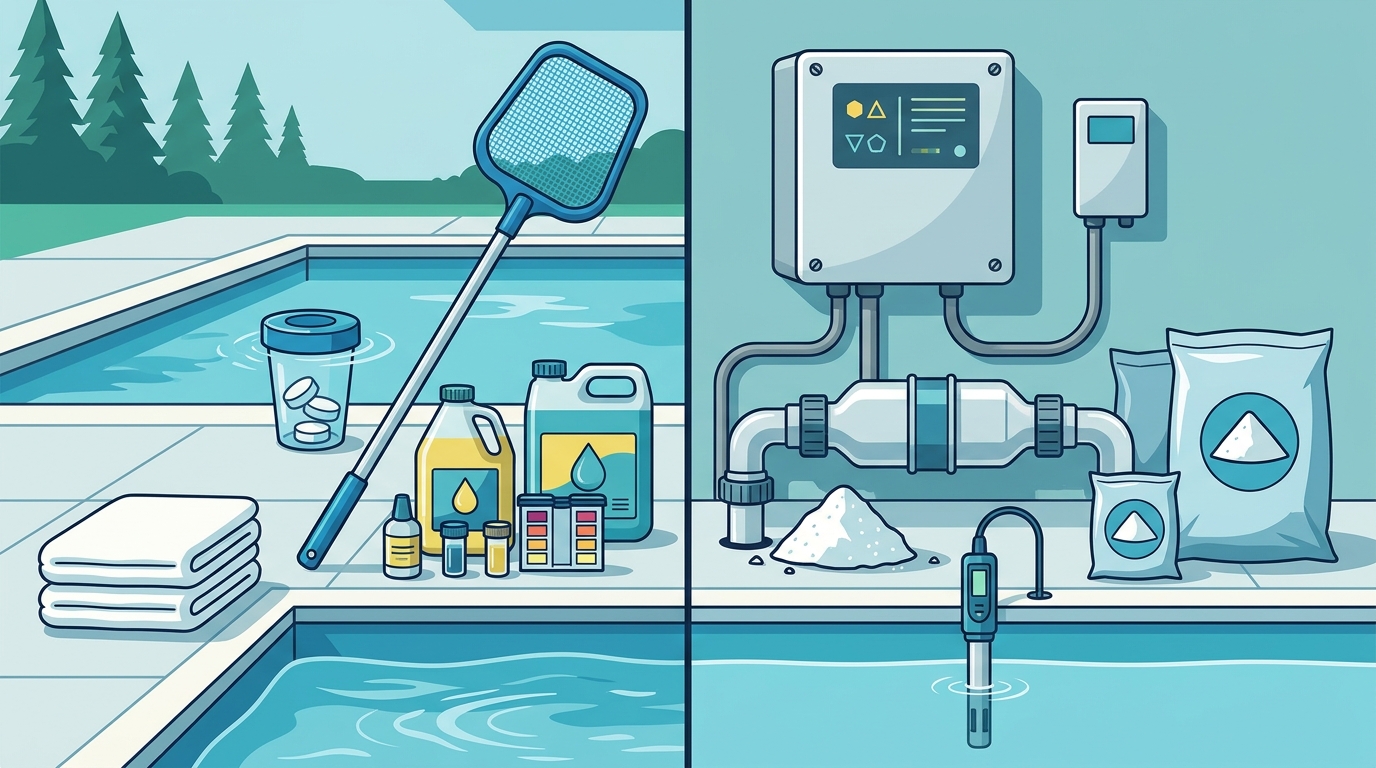
Frequently Asked Questions
Does a saltwater pool automatically balance pH?
No, saltwater pools do not automatically balance pH. The salt cell generates chlorine, but it does not adjust the acidity of the water. You must still test and adjust pH levels manually to keep the system efficient and the water safe.
How often should I test pH in a chlorine pool?
In a chlorine pool, you should test pH at least once a day during the summer months. In the North Atlanta region, heat and humidity can cause rapid changes in water chemistry, so daily testing helps prevent algae blooms and equipment damage.
Can I switch from chlorine to saltwater?
Yes, you can convert a chlorine pool to a saltwater system. This involves installing a salt cell and a control box. You will need to drain the pool or lower the water level to install the equipment. Top Notch Pool Management can help with the conversion process and ensure your system is properly balanced after the switch.
What is the ideal pH range for both systems?
The ideal pH range for both chlorine and saltwater pools is between 7.2 and 7.8. Maintaining this range ensures that chlorine is most effective at sanitizing the water and that the water is comfortable for swimmers. Deviating from this range can lead to equipment corrosion or scaling.
Does saltwater require less pH adjustment than chlorine?
Saltwater pools may require slightly less frequent pH adjustments because the continuous chlorine generation helps stabilize the water. However, you still need to monitor pH regularly. The key difference is that you are not adding chlorine, which can cause rapid pH shifts, but you are still managing the overall acidity of the water.
Conclusion
Understanding the differences in pH balancing between chlorine and saltwater pools is essential for maintaining a healthy swimming environment. Chlorine pools offer direct control but require frequent manual adjustments, while saltwater pools provide a more automated chlorine supply but still need regular pH monitoring. Top Notch Pool Management provides certified pool care and repair services in Alpharetta and the surrounding North Atlanta region. Our team can help you determine which system is best for your needs and ensure your water remains balanced and safe. to schedule a consultation and get expert advice on your pool's chemistry.