

Proper pH balancing is the foundation of safe, clear, and comfortable pool water. In Alpharetta, Georgia, fluctuating temperatures and local water chemistry can cause rapid pH shifts if left unmanaged. Top Notch Pool Management recommends a structured approach to testing, adjusting, and monitoring to protect your equipment and swimmers.
1. Test Your Water Before Adding Any Chemicals
Never guess your pH levels; always test first. pH is a measure of how acidic or basic your pool water is, and it directly impacts the effectiveness of your sanitizer. Use a reliable digital tester or high-quality test strips to get an accurate reading before making any adjustments. This baseline ensures you add the correct amount of chemical, preventing over-correction.
2. Understand the Ideal pH Range
Aim for a pH level between 7.2 and 7.8. This range is considered neutral and is the sweet spot for both swimmer comfort and chemical efficiency. Water that is too acidic (below 7.2) can irritate eyes and skin, while water that is too basic (above 7.8) can cause cloudy water and scale buildup. Understanding this target range helps you interpret your test results accurately.
3. Check Your Total Alkalinity First
Alkalinity acts as a buffer for your pH, so it must be balanced before adjusting pH. Total alkalinity is the measure of the concentration of alkaline substances in the water, which helps stabilize pH levels. If your alkalinity is too low, your pH will swing wildly, making it nearly impossible to keep it stable. If it is too high, your pH will be difficult to lower. Always bring alkalinity into the 80-120 ppm range before touching your pH.
4. Use the Correct Chemicals for Adjustment
Use pH Down (sodium bisulfate) to lower pH and pH Up (soda ash) to raise it. These chemicals are specifically formulated to adjust pH without drastically altering your alkalinity. Avoid using muriatic acid for routine pH adjustments, as it can lower alkalinity too quickly and cause long-term instability. Always add chemicals to the water, not the other way around, and follow manufacturer dilution instructions.
5. Add Chemicals Gradually
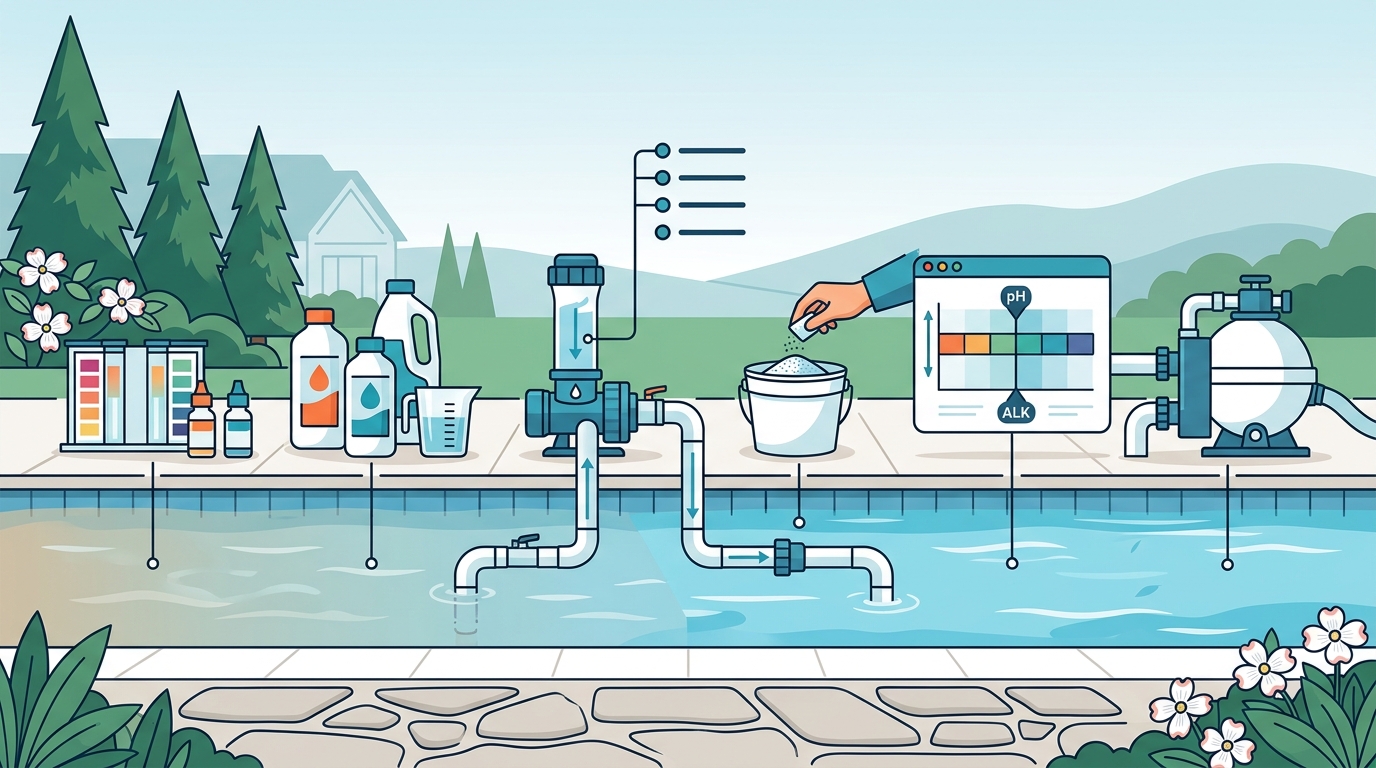
Make small adjustments and retest after each addition. Adding too much chemical at once can overshoot your target range, leading to a cycle of over-correction. Add a small amount of pH adjuster, run your pump for a few hours to circulate the water, and then retest. This iterative process ensures precision and prevents waste.
6. Monitor pH Daily During Peak Season
Georgia’s heat and heavy summer use can cause rapid pH fluctuations. In Alpharetta, high temperatures and increased bather load can shift pH levels within 24 hours. Daily testing is essential during the summer months to catch shifts early. If you notice your pH drifting consistently in one direction, it may indicate an underlying issue with your alkalinity or water source.
7. Consider Professional Maintenance for Consistency
Consistent professional care ensures your pH stays in the ideal range year-round. Top Notch Pool Management provides weekly pool cleaning and chemical balancing services tailored to Alpharetta’s unique water conditions. Our certified technicians monitor your pH, alkalinity, and sanitizer levels to prevent issues before they start. This proactive approach saves you time, money, and stress while keeping your pool safe and clear.
Choosing the Right Approach for Your Pool
Selecting the right pH balancing strategy depends on your pool type, usage patterns, and local water conditions. For most Alpharetta homeowners, a combination of regular testing and professional weekly maintenance offers the best balance of cost, convenience, and water quality. If you are unsure where to start, consult with a certified pool professional to develop a customized plan for your specific pool.
Frequently Asked Questions
How often should I test my pool’s pH level?
You should test your pool’s pH level at least twice a week, and daily during peak summer months. In Alpharetta, where temperatures and usage can cause rapid changes, more frequent testing helps you catch shifts early and maintain stable water chemistry.
What is the difference between pH and total alkalinity?
pH measures how acidic or basic your water is, while total alkalinity measures the water’s ability to resist pH changes. Alkalinity acts as a buffer, so it must be balanced before adjusting pH. If your alkalinity is out of range, your pH will be difficult to stabilize.
Can I use muriatic acid to adjust my pool’s pH?
You can use muriatic acid to lower pH, but it is not recommended for routine adjustments. Muriatic acid lowers alkalinity along with pH, which can cause long-term instability. For routine pH adjustments, use pH Down (sodium bisulfate) or pH Up (soda ash) instead.
Why does my pool’s pH keep fluctuating?
Your pool’s pH may fluctuate due to low total alkalinity, high bather load, or local water conditions. In Alpharetta, Georgia’s hard water and seasonal temperature changes can also contribute to pH instability. Balancing your alkalinity first is the key to stabilizing your pH.
Do I need a professional to balance my pool’s pH?
You do not need a professional for basic pH adjustments, but professional maintenance is recommended for consistent results. Top Notch Pool Management provides weekly chemical balancing services that ensure your pH stays in the ideal range. This proactive approach prevents issues and saves you time and effort.
How does pH affect my pool equipment?
Improper pH levels can damage your pool equipment and shorten its lifespan. Acidic water can corrode metal components, while basic water can cause scale buildup on heaters and pumps. Maintaining a stable pH protects your investment and ensures your equipment operates efficiently.