
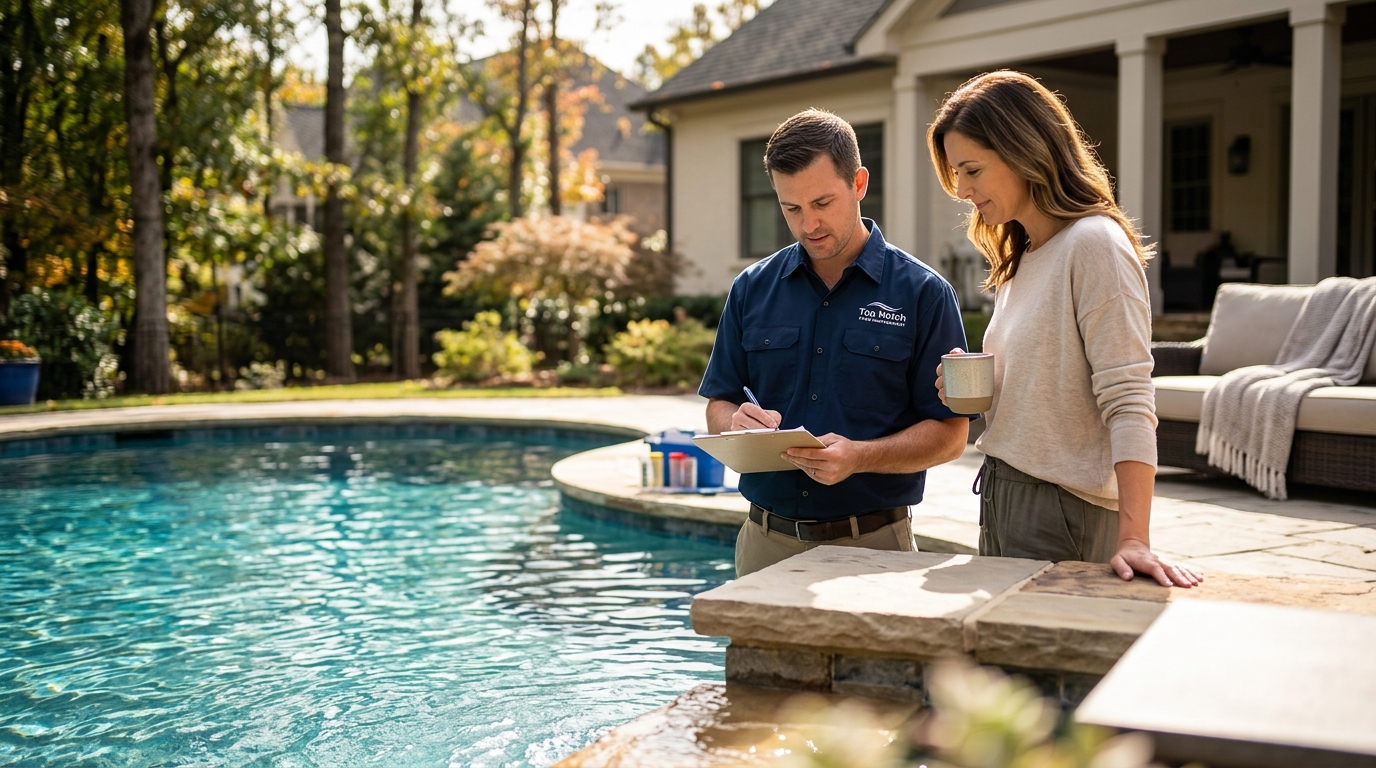
For Alpharetta homeowners, weekly professional chemical balancing is generally the superior choice for maintaining water clarity and equipment longevity compared to DIY salt systems. This guide covers the specific pH balancing requirements, the impact of Georgia's climate on water chemistry, and how to choose the right maintenance strategy for your backyard oasis.
pH Balancing Requirements
Proper pH balancing is the foundation of any successful pool maintenance strategy. pH is a measure of the acidity or alkalinity of the water, and it directly affects how well your sanitizer works. In Alpharetta, where water sources can vary in mineral content, maintaining a stable pH is critical for both swimmer comfort and equipment protection.
The Ideal pH Range
The ideal pH range for a residential swimming pool is between 7.2 and 7.8. When pH levels drift above 7.8, the water becomes alkaline, which can cause skin and eye irritation and reduce the effectiveness of chlorine. Conversely, when pH drops below 7.2, the water becomes acidic, leading to corrosion of metal parts, etching of plaster, and potential damage to pool liners.
Why pH Drifts in Alpharetta
Several local factors contribute to pH fluctuations in the North Atlanta region. Heavy rainfall, which is common in Georgia, can dilute chemicals and lower pH levels. Additionally, high bather loads introduce oils, sweat, and other contaminants that raise pH. Because these factors change weekly, a static approach to chemical management often fails. This is why weekly pool cleaning services include precise pH testing and adjustment as a core component of the visit.
Climate and Water Chemistry
Alpharetta's climate presents unique challenges for pool owners. The combination of hot summers, high humidity, and significant pollen counts creates an environment where water chemistry can shift rapidly. Understanding these local conditions is essential for choosing the right maintenance approach.
Heat and Algae Growth
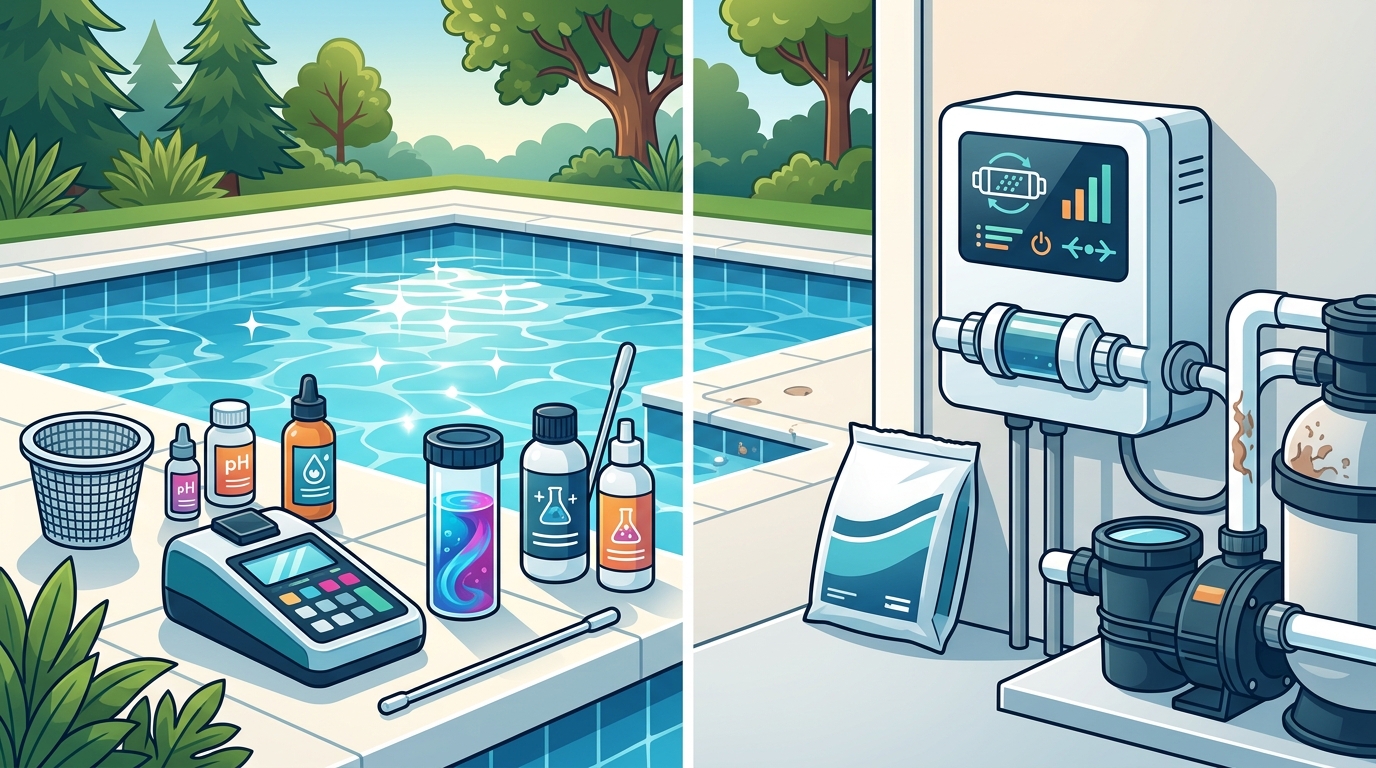
Warm water accelerates the growth of algae and bacteria. In the summer months, when temperatures consistently exceed 80 degrees Fahrenheit, the metabolic rate of microorganisms increases. This means that even a small drop in sanitizer levels can lead to an algae bloom within days. Weekly professional service ensures that sanitizer levels are adjusted to match the current temperature and bather load, preventing these outbreaks before they start.
Pollen and Debris
Georgia's heavy pollen seasons can clog filters and introduce organic matter into the water. This organic load consumes chlorine and can lead to cloudy water if not addressed promptly. Professional technicians use specialized tools and techniques to remove this debris efficiently, ensuring that the filtration system operates at peak capacity. For more on how local conditions affect your pool, explore our guide on Alpharetta pool cleaning.
Salt System Mechanics
A saltwater pool system is a chlorinator that uses electrolysis to generate chlorine from salt. While often marketed as a low-maintenance alternative, salt systems require specific conditions to function correctly. Understanding how these systems work helps homeowners make informed decisions about their pool's long-term health.
How Salt Chlorinators Work
Salt chlorinators contain a cell with electrodes that pass an electric current through saltwater. This process converts salt (sodium chloride) into chlorine. The system then returns the salt to the pool, creating a continuous cycle. While this eliminates the need to buy and store chlorine, it does not eliminate the need for chemical balancing. Salt systems are sensitive to pH levels and calcium hardness, and they can fail if these parameters are not maintained within narrow ranges.
Maintenance of Salt Cells
Salt cells are consumable components that degrade over time. The lifespan of a salt cell depends on usage, water chemistry, and the quality of the cell. In high-usage pools, cells may need replacement every 3 to 5 years. Replacing a salt cell is a significant expense, and improper water chemistry can shorten its life considerably. This is why pool service and repair professionals often recommend regular inspections of salt system components to prevent costly failures.
Weekly Service vs. Salt Systems
Choosing between weekly professional chemical balancing and a DIY salt system depends on your priorities, budget, and willingness to perform maintenance. Both approaches have distinct advantages and disadvantages that should be considered in the context of Alpharetta's specific environmental conditions.
| Feature | Weekly Professional Service | DIY Salt System |
|---|---|---|
| Chemical Management | Professional testing and precise dosing | Homeowner responsible for monitoring and adjustment |
| pH Stability | High, due to frequent professional checks | Variable, depends on homeowner diligence |
| Equipment Care | Included in service visits | Homeowner responsible for cell cleaning and replacement |
| Upfront Cost | Lower, no major equipment purchase | Higher, cost of salt cell and installation |
| Ongoing Cost | Weekly service fee | Cost of salt and eventual cell replacement |
| Time Commitment | Minimal, technician handles all tasks | Significant, requires regular testing and maintenance |
For most Alpharetta homeowners, the convenience and consistency of weekly professional service outweigh the potential savings of a DIY salt system. Professional technicians have the expertise to diagnose and correct complex water chemistry issues that may not be apparent to a homeowner. They also have access to commercial-grade equipment and chemicals that ensure optimal results. If you are considering a salt system, it is important to understand that it is not a set-and-forget solution. It still requires regular monitoring and maintenance to function correctly.
Key Takeaways
- pH is the most critical parameter in pool water chemistry, and it must be maintained between 7.2 and 7.8 for optimal sanitizer effectiveness.
- Alpharetta's hot, humid climate and heavy pollen seasons create conditions that accelerate algae growth and water chemistry fluctuations.
- Salt systems generate chlorine through electrolysis but are sensitive to pH and calcium hardness levels.
- Salt cells are consumable components that require regular cleaning and eventual replacement, adding to long-term costs.
- Weekly professional service provides consistent, expert management of water chemistry, reducing the risk of equipment damage and algae blooms.
- DIY salt systems require significant time and technical knowledge to maintain, which may not be suitable for all homeowners.
- Professional technicians can diagnose and correct complex water chemistry issues that may not be apparent to a homeowner.
- Choosing the right maintenance strategy depends on your budget, time availability, and willingness to perform technical tasks.
Frequently Asked Questions
What is the ideal pH level for a swimming pool?
The ideal pH level for a swimming pool is between 7.2 and 7.8. This range ensures that chlorine is most effective at sanitizing the water while minimizing irritation to swimmers' eyes and skin.
Do salt systems eliminate the need for chemical balancing?
No, salt systems do not eliminate the need for chemical balancing. They still require regular monitoring and adjustment of pH, alkalinity, and calcium hardness to function correctly and protect pool equipment.
How often should I test my pool's pH level?
You should test your pool's pH level at least twice a week, or more frequently during periods of heavy use or extreme weather. Professional service providers typically test and adjust pH during every weekly visit.
What are the signs that my salt cell needs replacement?
Signs that a salt cell needs replacement include reduced chlorine production, increased energy consumption, and visible scaling or damage on the cell plates. Regular professional inspections can help identify these issues early.
Is a salt system cheaper than weekly professional service?
While salt systems may reduce the cost of buying chlorine, they require significant upfront investment in equipment and ongoing maintenance. When factoring in the cost of cell replacement and the time required for maintenance, weekly professional service is often more cost-effective for many homeowners.
How does Alpharetta's climate affect pool water chemistry?
Alpharetta's hot summers and high humidity accelerate algae growth and can cause rapid changes in water chemistry. Heavy rainfall can also dilute chemicals and lower pH levels, requiring more frequent adjustments.
Conclusion
Choosing between weekly chemical balancing and a salt system is a significant decision for any Alpharetta pool owner. While salt systems offer the convenience of automatic chlorine generation, they require diligent maintenance and technical knowledge to function optimally. Weekly professional service provides a comprehensive solution that addresses all aspects of pool care, from water chemistry to equipment maintenance, ensuring that your pool remains safe, clean, and enjoyable throughout the year. At Top Notch Pool Management, we are committed to providing expert guidance and reliable service to help you make the best choice for your pool. Our certified technicians have the experience and expertise to manage the unique challenges of Alpharetta's climate, ensuring that your pool is in peak condition every week.