
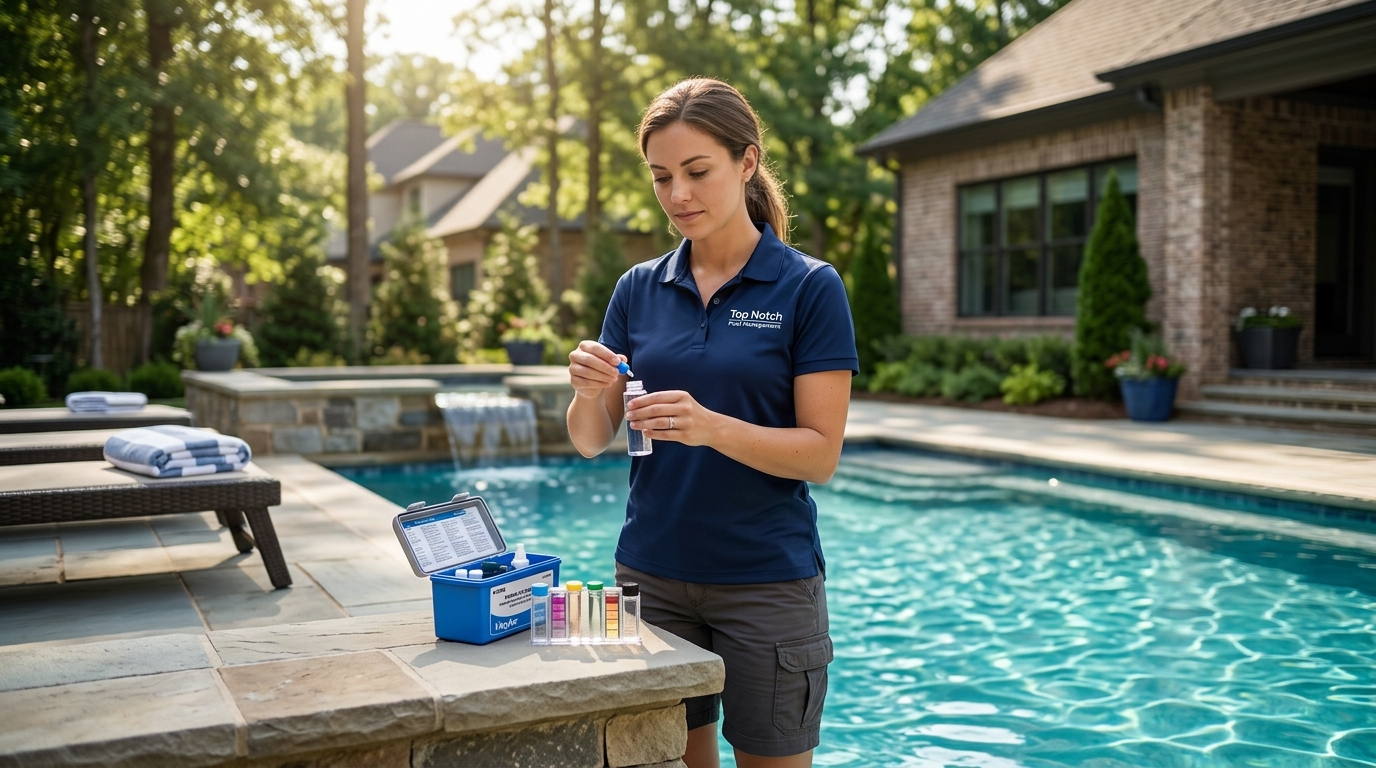
7 Certifications Every Pool Technician Should Hold for Weekly Maintenance
Choosing the right professional for your weekly pool care routine depends heavily on the credentials they bring to the table. At Top Notch Pool Management, we believe that true expertise goes beyond basic cleaning; it requires formal, industry-recognized training in water chemistry and equipment safety. The right certifications ensure your pool remains safe, balanced, and protected from costly damage year-round. according to Certified Swimming Pool
1. Certified Pool Operator (CPO)
The CPO is the gold standard for commercial and high-responsibility pool management. This credential demonstrates that a technician has mastered the operational, safety, and compliance requirements of pool systems. It covers advanced water balance, risk prevention, and system troubleshooting. For homeowners, a CPO-certified technician brings a level of technical rigor that prevents minor issues from becoming major structural or safety hazards.
2. Certified Pool & Spa Maintenance Specialist (CMS)
The CMS certification focuses specifically on the day-to-day upkeep of residential and spa systems. Technicians holding this credential are trained in water quality management, equipment systems, and structural care. This is the primary certification you want to see for a weekly maintenance routine, as it ensures your technician is proficient in the exact tasks performed during a standard service visit, from chemical balancing to filter inspection.
3. State-Specific Pool Operator License
State licensing ensures your technician meets local legal and safety standards. In Georgia, pool operators must adhere to specific state regulations regarding water safety and chemical handling. A licensed technician is legally accountable for the safety of your water. This credential provides an extra layer of assurance that the professional is not only skilled but also compliant with regional health and safety codes.
4. OSHA Hazard Communication (HazCom) Training
HazCom training certifies that a technician can safely handle and store pool chemicals. Pool maintenance involves working with strong acids, bases, and oxidizers. Proper HazCom training ensures your technician understands Material Safety Data Sheets (MSDS) and knows how to prevent dangerous chemical reactions. This is critical for protecting both your family and the technician from accidental exposure or injury.
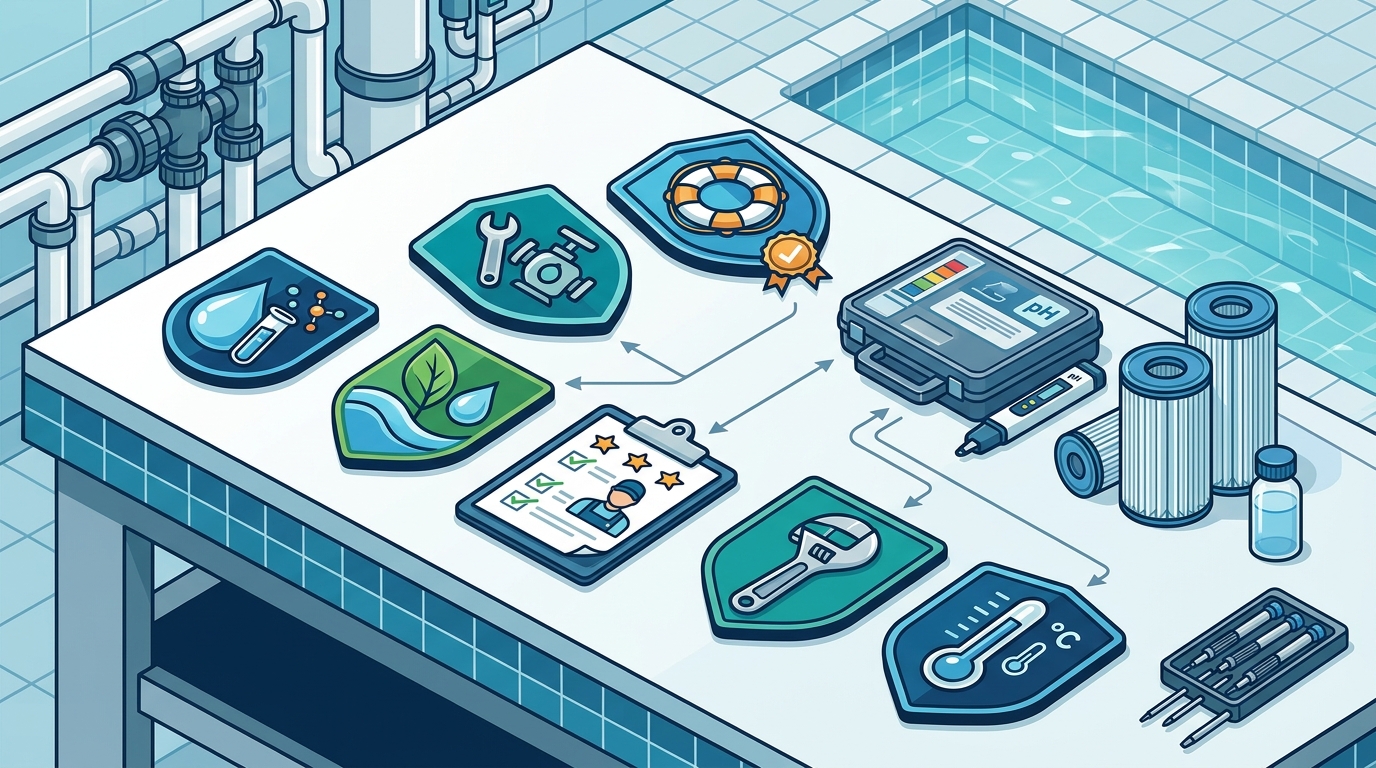
5. First Aid and CPR Certification
First Aid and CPR certification is a non-negotiable safety baseline for any pool professional. While you hope to never need it, a technician who is certified in CPR and First Aid is prepared to respond to emergencies. This credential shows a commitment to the well-being of swimmers and guests. It is a standard requirement for many professional pool service providers and a key indicator of a responsible business partner.
6. Manufacturer-Specific Equipment Training
Manufacturer training ensures your technician knows how to service your specific pump, filter, or heater. Major pool equipment brands often provide specialized training for their products. A technician trained on your specific equipment brand can diagnose issues more accurately and perform repairs more efficiently. This reduces downtime and prevents the use of incorrect parts that could void your equipment warranty.
7. Continuing Education and Recertification
Recertification proves that a technician is keeping their knowledge current with industry changes. Pool technology and water chemistry best practices evolve over time. A technician who actively pursues continuing education and recertification is committed to professional growth. This ensures they are using the latest, most effective methods for algae prevention and water balancing, rather than relying on outdated techniques.
Choosing the Right Certified Technician
When selecting a provider for your weekly maintenance, prioritize companies where every technician holds at least the CMS certification, with CPO credentials for senior staff. At Top Notch Pool Management, our team is fully certified to ensure your pool in Alpharetta, Roswell, or Johns Creek receives the highest standard of care. We combine these credentials with local expertise to keep your water safe and clear.
Frequently Asked Questions
What is the difference between CPO and CMS certifications?
The CPO (Certified Pool Operator) is a broader credential focused on commercial operations and safety compliance, while the CMS (Certified Pool & Spa Maintenance Specialist) is tailored specifically for residential maintenance and day-to-day upkeep. For a weekly home pool service, the CMS is the most directly relevant certification, though CPO holders bring additional operational expertise.
Do I need a technician with a state license for my home pool?
While state licensing is strictly required for commercial pools, it is a strong indicator of professionalism for residential services. A licensed technician is trained in local safety codes and chemical handling regulations, which adds a layer of accountability and safety to your weekly maintenance routine.
How often should pool technicians recertify?
Most industry certifications, including CPO and CMS, require recertification every two to three years. This process involves passing an exam or completing continuing education credits to ensure the technician is up-to-date with the latest safety standards and water chemistry practices.
Why is HazCom training important for pool cleaning?
HazCom (Hazard Communication) training teaches technicians how to safely handle, store, and dispose of pool chemicals. Since pool maintenance involves mixing and applying strong chemicals, this training prevents dangerous reactions and ensures the safety of both the technician and your household.
Can I verify a pool technician's certifications?
Yes, you can verify certifications through the issuing bodies, such as the Pool & Spa Certification Institute (PSCI) or state licensing boards. Reputable companies like Top Notch Pool Management are transparent about their team's credentials and can provide proof of certification upon request.
Does certification affect the cost of pool service?
Certified technicians may charge slightly more than uncertified providers, but this investment often saves money in the long run. Properly certified technicians are better equipped to prevent equipment damage and water quality issues, which can lead to expensive repairs if left unaddressed.