
Proper pool water chemistry is the foundation of a safe, clear, and long-lasting swimming pool. It involves balancing pH, alkalinity, and sanitizer levels to protect swimmers and equipment. Top Notch Pool Management helps homeowners in Alpharetta and the North Atlanta region achieve consistent water quality through certified, weekly maintenance.
1. Test Your Water Regularly
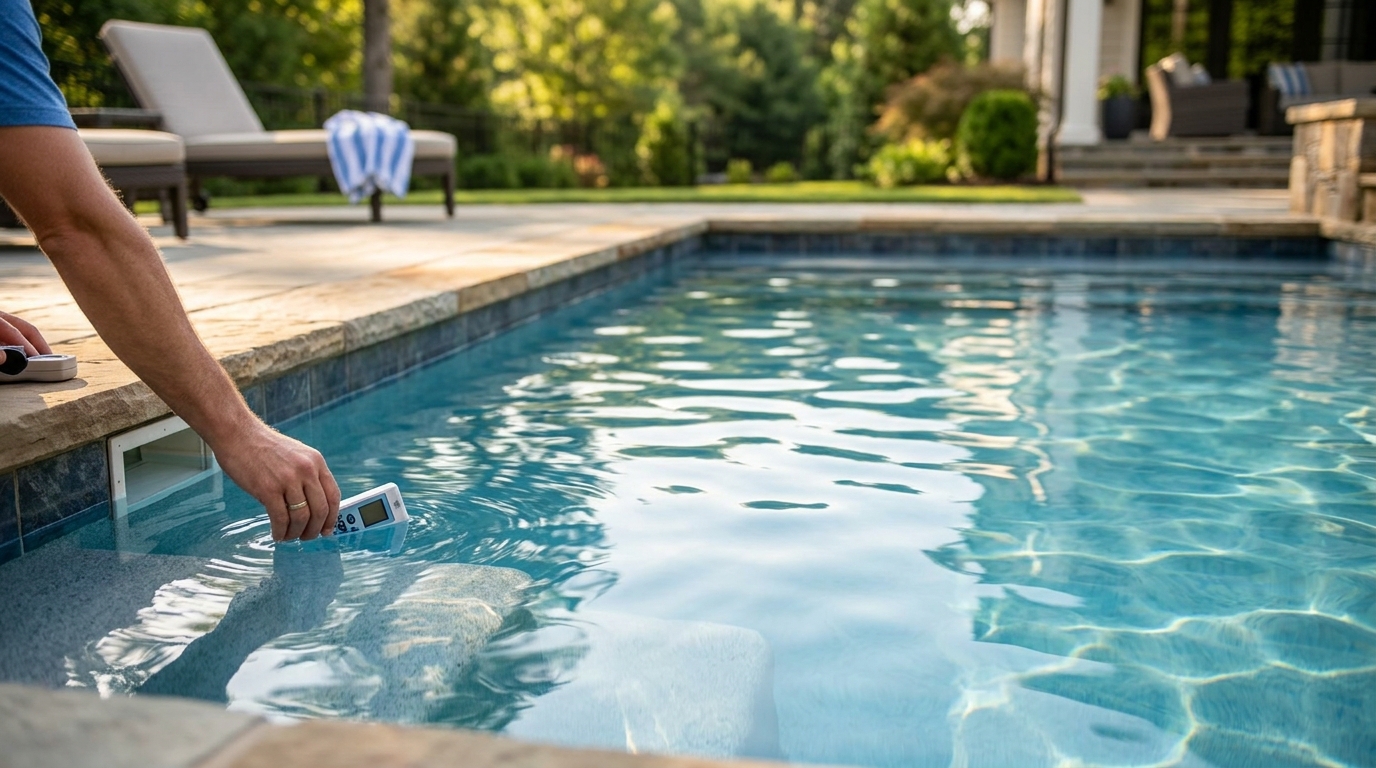
Accurate testing is the first step to balanced water. You should test your pool water at least twice a week, or more often during heavy use or hot weather. Use a reliable digital tester or high-quality test strips to measure pH, alkalinity, chlorine, and calcium hardness. Consistent testing allows you to catch imbalances before they cause algae or equipment damage.
2. Balance Your pH Levels
Keep your pH between 7.2 and 7.6 for optimal comfort and safety. pH measures how acidic or basic your water is. If the pH is too high, chlorine becomes less effective, and swimmers may experience eye irritation. If it is too low, the water can become corrosive to your pool surfaces and equipment. Adjusting pH is a critical part of maintaining proper pool water chemistry.
3. Maintain Total Alkalinity
Total alkalinity acts as a buffer to stabilize your pH. The ideal range for total alkalinity is between 80 and 120 parts per million (ppm). Low alkalinity causes pH to fluctuate rapidly, making it difficult to maintain balance. High alkalinity can lead to cloudy water and scale formation. Keeping alkalinity in check makes pH management much easier.
4. Keep Chlorine Levels Consistent
Chlorine is your primary defense against bacteria and algae. Maintain free chlorine levels between 1 and 3 ppm for a residential pool. In Georgia's hot climate, chlorine burns off faster, so you may need to add it more frequently. Consistent chlorine levels ensure your water stays sanitized and safe for your family.
5. Monitor Calcium Hardness
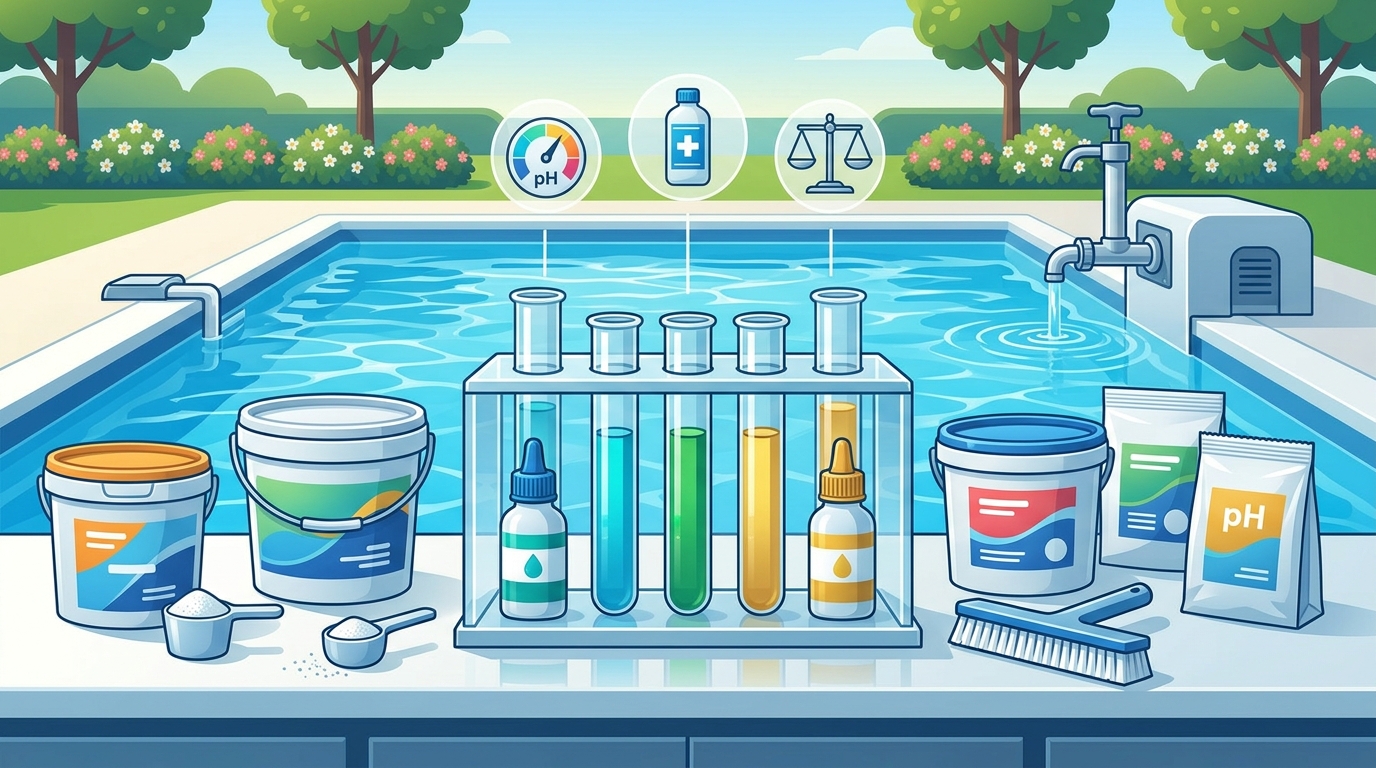
Calcium hardness prevents both corrosion and scale buildup. The recommended range is 200 to 400 ppm. If calcium levels are too low, your pool water will leach calcium from plaster and tile, causing etching and damage. If levels are too high, you will see white scale deposits on walls and steps. Balancing calcium hardness protects your pool's structural integrity.
6. Shock Your Pool Weekly
Shocking eliminates organic contaminants that regular chlorine cannot handle. Add a chlorine shock treatment once a week, especially after heavy bather loads or rainstorms. This process raises the chlorine level temporarily to destroy bacteria, algae, and other impurities. Always shock your pool in the evening to minimize chlorine evaporation from the sun.
7. Adjust Chemicals Gradually
Make small, incremental changes to avoid drastic swings. Never add large amounts of chemicals at once. Instead, add a small dose, wait 24 hours, and test again. This method prevents over-correction, which can lead to new imbalances. Gradual adjustments are the hallmark of professional pool care.
Choosing the Right Approach
When deciding how to manage your pool's chemistry, consider your time, expertise, and the local climate. If you prefer a hands-off approach, professional weekly service is the best option. If you enjoy DIY maintenance, stick to a strict testing schedule and make gradual adjustments. For most North Atlanta homeowners, a hybrid approach with professional oversight works best.
Frequently Asked Questions
How often should I test my pool water?
You should test your pool water at least twice a week. During peak summer months or after heavy rain, you may need to test daily to maintain proper pool water chemistry.
What is the ideal pH range for a swimming pool?
The ideal pH range is between 7.2 and 7.6. This range ensures that chlorine works effectively and that the water is comfortable for swimmers.
Why does my pool water turn cloudy?
Cloudy water is usually caused by low alkalinity, high calcium hardness, or poor filtration. Balancing your water chemistry and backwashing your filter often resolves this issue.
Can I use saltwater instead of chlorine?
Yes, saltwater systems generate chlorine from salt. However, you still need to monitor pH and alkalinity to ensure the system produces the correct amount of sanitizer.
How does Georgia's climate affect pool chemistry?
Georgia's heat and humidity accelerate chlorine evaporation and algae growth. You may need to add chemicals more frequently during the summer months to maintain balance. according to Reagent Chemicals
Trust Top Notch Pool Management
Maintaining proper pool water chemistry requires consistency and expertise. Top Notch Pool Management provides certified technicians who handle all aspects of water balancing, from testing to treatment. Our team serves Alpharetta, Roswell, and the surrounding North Atlanta region with reliable, weekly service. Schedule your weekly pool cleaning service today and enjoy a crystal-clear pool all season long.