
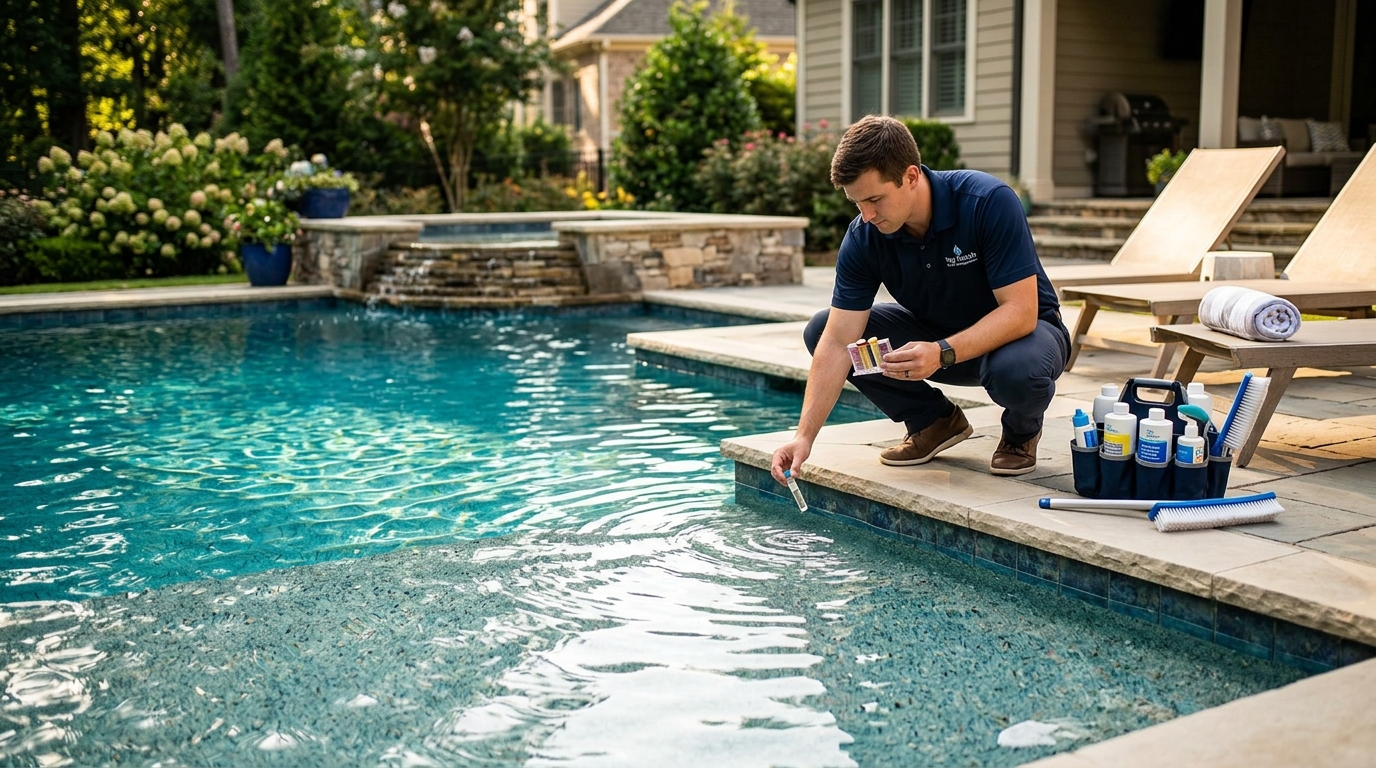
Weekly water balancing is the single most effective way to protect your pool equipment and ensure safe, clear swimming. By testing and adjusting key chemical levels consistently, you prevent algae blooms and surface damage before they start. Top Notch Pool Management uses these proven steps to keep pools across Alpharetta and the North Atlanta region in pristine condition.
1. Test pH and Total Alkalinity First
Start every session by measuring pH and alkalinity to establish a stable chemical foundation. Total alkalinity is the measure of the water's buffering capacity, which helps prevent drastic pH swings. A stable alkalinity level makes it much easier to maintain the correct pH throughout the week. If your alkalinity is out of range, adjust it before touching any other chemicals.
2. Adjust pH to the Ideal Range
Keep your pH between 7.2 and 7.6 to maximize sanitizer effectiveness and swimmer comfort. When pH is too high, chlorine becomes less effective at killing bacteria and algae. When it is too low, the water can become corrosive and irritate swimmers' eyes and skin. Small, gradual adjustments are always better than large shocks to the system.
3. Maintain Consistent Free Chlorine Levels
Hold free chlorine between 1 and 3 parts per million to sanitize the water effectively. Free chlorine is the active ingredient that destroys pathogens and prevents algae growth. In the hot Georgia climate, chlorine burns off faster, so you may need to replenish it more frequently during summer months. Consistent levels protect your investment and keep the water safe for your family.
4. Monitor Calcium Hardness
Check calcium hardness to prevent scale buildup or plaster etching. Calcium hardness is the concentration of dissolved calcium in the water. If the level is too high, you will see white scale on your pool walls and equipment. If it is too low, the water can pull calcium from your plaster, causing rough, pitted surfaces. Keeping this level in the middle of the recommended range protects your pool's structural integrity.
5. Check Cyanuric Acid (Stabilizer) Levels
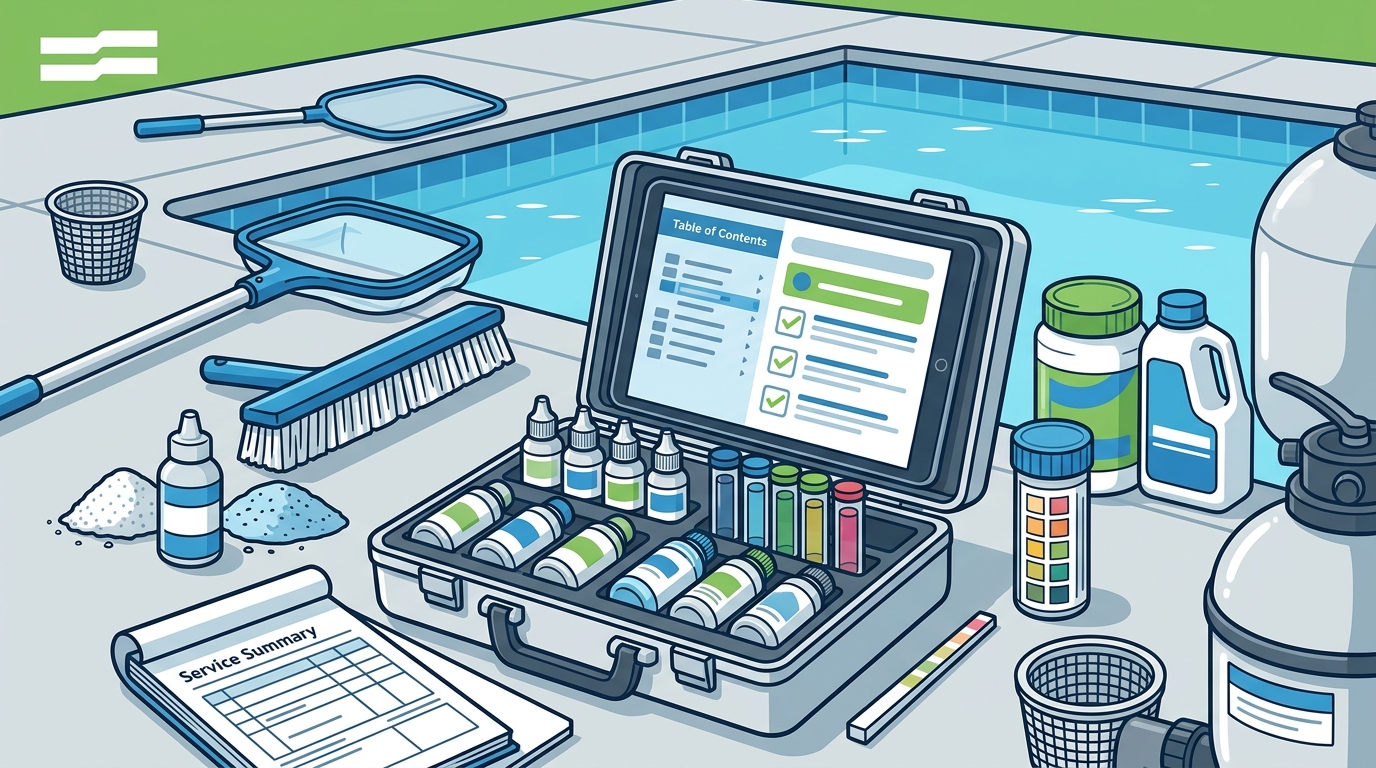
Ensure cyanuric acid stays between 30 and 50 ppm to protect chlorine from UV degradation. Cyanuric acid is a chemical that stabilizes chlorine against the sun's ultraviolet rays. Without it, chlorine would burn off almost instantly in direct sunlight. However, too much stabilizer can make chlorine less effective, so it is important to monitor this level regularly.
6. Inspect and Clean Filtration Equipment
Empty skimmer baskets and clean filters to ensure proper water circulation. A clogged filter forces your pump to work harder and reduces the water's ability to pass through the system. In areas like Alpharetta and Roswell, heavy pollen and leaf debris can quickly clog filters if not removed weekly. Good circulation is essential for distributing chemicals evenly throughout the pool.
7. Review Water Clarity and Algae Signs
Look for cloudy water or green spots that indicate a need for immediate action. Even with perfect chemical numbers, you should visually inspect the pool for any signs of algae or cloudiness. If you notice green spots on the walls or a hazy appearance, it is time to brush the surfaces and potentially shock the pool. Catching these issues early prevents them from becoming a major cleanup project.
Choosing the Right Approach for Your Pool
While you can handle these steps yourself, consistency is the hardest part of DIY pool care. If you want to ensure your water stays balanced without the guesswork, professional service is the best option. Top Notch Pool Management provides certified technicians who handle every aspect of water chemistry and equipment care for you.
Frequently Asked Questions
How often should I test my pool water?
You should test your pool water at least once a week, and more often during heavy use or hot weather. Weekly testing allows you to catch small imbalances before they turn into major problems.
What is the most important chemical to balance first?
Total alkalinity is the most important chemical to balance first because it acts as a buffer for pH. If your alkalinity is out of range, your pH will fluctuate wildly, making it difficult to maintain any other chemical levels.
Why does my pool water turn cloudy even when chemicals look fine?
Cloudy water is often caused by poor circulation or a clogged filter rather than a chemical imbalance. Ensure your pump is running for enough hours each day and that your filter is clean to resolve most clarity issues.
Can I use saltwater to maintain chlorine levels?
Yes, saltwater systems generate chlorine from dissolved salt, which can be a convenient way to maintain sanitizer levels. However, you still need to monitor pH and other chemicals to keep the system running efficiently.
What should I do if my pH is too high?
If your pH is too high, you need to lower it using a pH decreaser or acid. Add the chemical slowly and retest after the water has circulated for a few hours to avoid overshooting the target range.