
What's the Right Way to Balance Pool Water Chemistry Every Week?
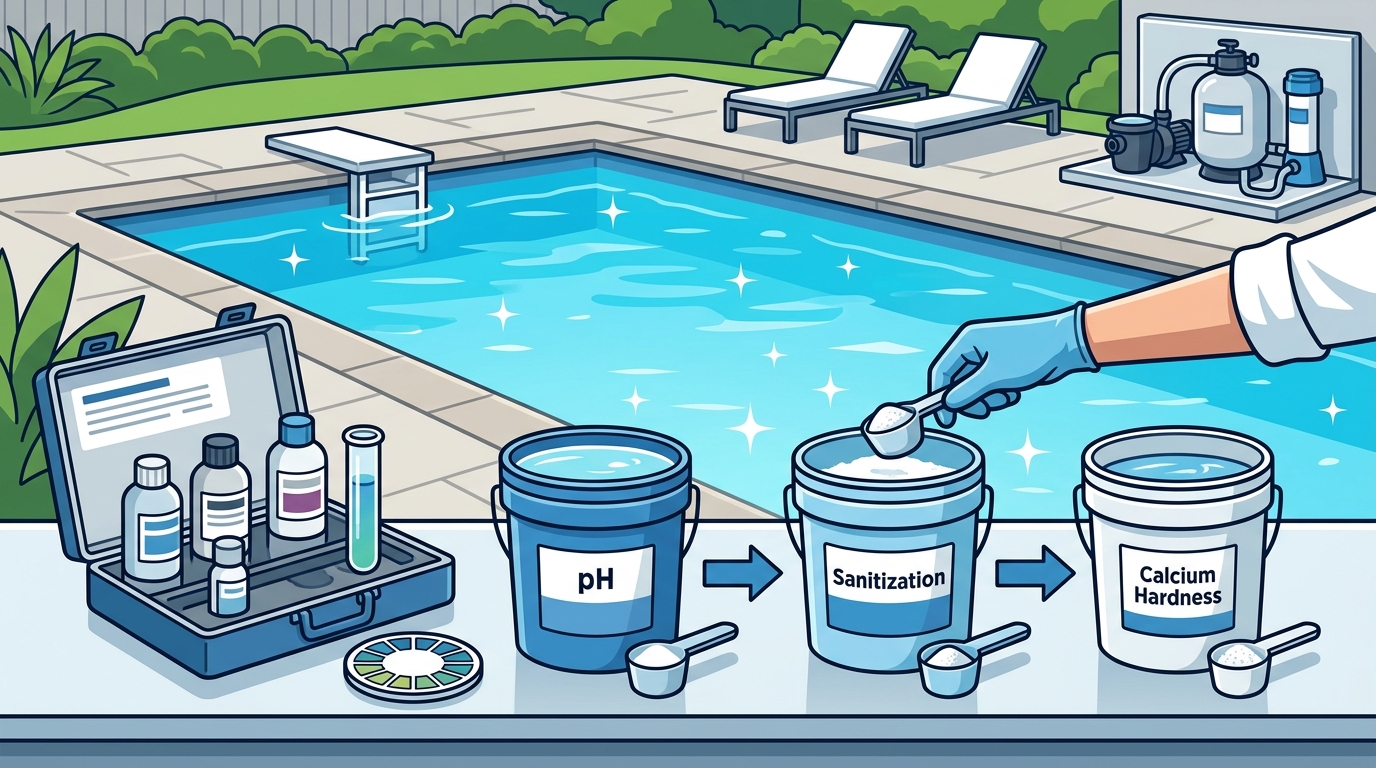
The right way to balance pool water chemistry every week is to test all key parameters, adjust pH and alkalinity first, then sanitize with chlorine, and finally check calcium hardness. This specific order prevents chemical reactions from interfering with one another. Top Notch Pool Management uses this proven sequence to keep North Atlanta pools safe and clear.
The Critical Order of Chemical Adjustments
Many homeowners make the mistake of adding chlorine before balancing the water. This is inefficient because chlorine is unstable in water that is not properly buffered. Alkalinity is the buffer that keeps pH stable. If your alkalinity is too low, your pH will swing wildly, making it nearly impossible to maintain a consistent chlorine level. By adjusting alkalinity first, you create a stable foundation for the rest of your chemical program.
Once alkalinity is in the target range, you must adjust the pH. pH is the measure of how acidic or basic the water is. Ideal swimming pool pH sits between 7.2 and 7.8. If the pH is too high, chlorine becomes less effective at killing bacteria. If it is too low, the water becomes corrosive and can irritate swimmers' eyes. Only after these two parameters are stable should you add your primary sanitizer.
Building a Consistent Weekly Testing Routine
Consistency is the single most important factor in successful water chemistry. You do not need to test every single day, but you must test at least once a week, ideally on the same day each week. This creates a predictable rhythm that helps you spot trends before they become problems. For example, if you notice your pH creeping up every week, you can adjust your alkalinity slightly lower to prevent future spikes.
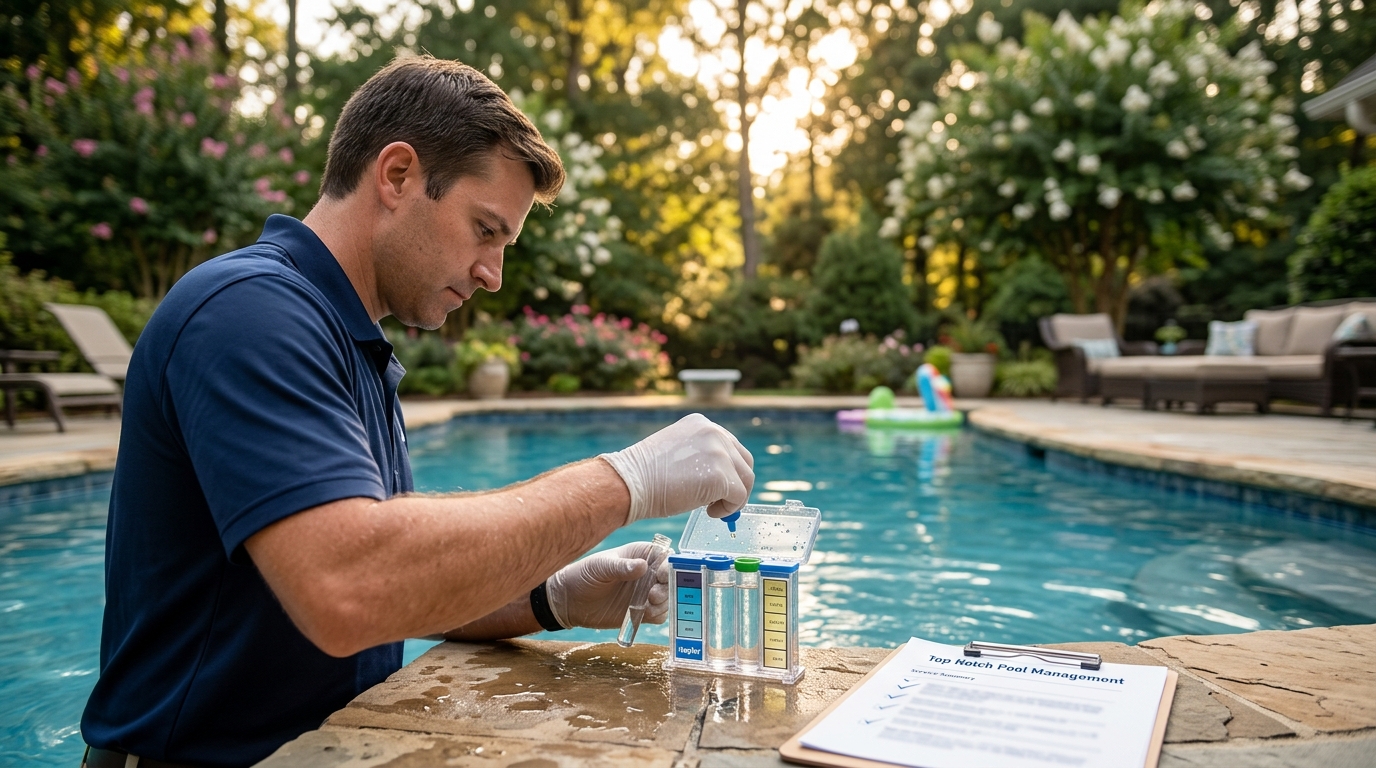
Top Notch Pool Management technicians follow a strict protocol during their weekly visits. They test for pH, total alkalinity, free chlorine, combined chlorine, and calcium hardness. They also check cyanuric acid levels, which is the UV stabilizer that protects chlorine from burning off in the sun. By tracking these five numbers, they can predict how the water will behave over the next seven days. This proactive approach saves homeowners from the frustration of dealing with green water or cloudy pools.
Managing Georgia's Unique Climate Challenges
Living in the North Atlanta region presents specific challenges for pool owners. The combination of high humidity, intense summer heat, and heavy pollen seasons creates a hostile environment for pool water. Cyanuric acid is the chemical that protects chlorine from the sun. In Georgia, you need a higher level of cyanuric acid than you would in a cooler climate to keep your chlorine effective. However, too much cyanuric acid can actually lock up your chlorine, making it less effective. Finding the right balance is a delicate task that requires local expertise.
Storms are another major factor. Heavy rain dilutes your chemicals and introduces organic matter into the pool. After a significant storm, you should test your water immediately. The rain may have lowered your alkalinity and pH, requiring a quick adjustment before you resume normal swimming. Top Notch Pool Management understands these local patterns and adjusts their service plans accordingly, ensuring your pool remains balanced even after unpredictable weather events.
Avoiding Common Homeowner Mistakes
One of the most common mistakes is over-chlorinating. Homeowners often see a slight drop in chlorine and add a large amount of shock. This can lead to high combined chlorine levels, which cause strong chemical odors and eye irritation. Instead of shocking, you should focus on maintaining a steady free chlorine level between 1 and 3 parts per million. Shocking should only be used when you have a specific problem, such as a high bather load or a recent algae bloom.
Another frequent error is ignoring calcium hardness. Calcium hardness is the measure of dissolved calcium in the water. If it is too low, the water will leach calcium from your plaster, causing etching and roughness. If it is too high, you will get scale buildup on your walls and equipment. Keeping calcium hardness between 200 and 400 ppm is essential for the long-term health of your pool structure. Regular testing ensures you stay within this safe range.
The Professional Advantage in Water Balancing
While DIY testing is possible, professional service offers a level of precision that is hard to replicate at home. Certified technicians have access to advanced testing kits and the experience to interpret results in the context of your specific pool. They understand how your equipment, your local water source, and your usage patterns interact. This holistic view allows them to make subtle adjustments that prevent problems before they start.
At Top Notch Pool Management, our CPO-certified technicians provide a personalized service summary after every visit. This document details exactly what was tested, what was adjusted, and why. This transparency helps you understand the health of your pool and builds trust in the process. Whether you are in Alpharetta, Roswell, or Johns Creek, our team is dedicated to keeping your water safe and your weekends stress-free.
Key Takeaways
- Always adjust alkalinity before pH, and pH before chlorine.
- Test your water at least once a week on a consistent day.
- Maintain pH between 7.2 and 7.8 for optimal chlorine effectiveness.
- Keep calcium hardness between 200 and 400 ppm to protect your pool surface.
- Test your water immediately after heavy rain or storms.
- Use cyanuric acid to protect chlorine from the sun, but avoid over-stabilizing.
- Professional service provides a consistent, documented approach to water balance.
Frequently Asked Questions
How often should I test my pool water?
You should test your pool water at least once a week. If you have a high bather load or live in a hot climate like Georgia, testing twice a week may be beneficial. Consistency is key to spotting trends early.
What is the ideal pH level for a swimming pool?
The ideal pH level for a swimming pool is between 7.2 and 7.8. This range keeps the water comfortable for swimmers and ensures that your chlorine sanitizer remains effective.
Why is alkalinity more important than pH?
Alkalinity acts as a buffer for pH. If your alkalinity is out of range, your pH will fluctuate rapidly and become difficult to control. Balancing alkalinity first creates a stable environment for managing pH.
How does rain affect pool chemistry?
Rain dilutes your chemicals and introduces organic matter. It often lowers pH and alkalinity. You should test your water after a storm and adjust your chemicals accordingly to restore balance.
What is the role of cyanuric acid in pool water?
Cyanuric acid stabilizes chlorine by protecting it from the sun's UV rays. In sunny climates like Georgia, it is essential for maintaining effective sanitization, but it should not be too high or it will lock up the chlorine.
Conclusion
Mastering the weekly rhythm of water chemistry balancing is the key to a healthy, clear pool. By following the correct order of adjustments and staying consistent with your testing, you can avoid the common pitfalls that lead to costly repairs and green water. For homeowners in the North Atlanta region, partnering with a local expert ensures that your pool is cared for with the specific knowledge of our climate. Contact Top Notch Pool Management today to schedule a professional water balance assessment and enjoy a stress-free swimming season.