
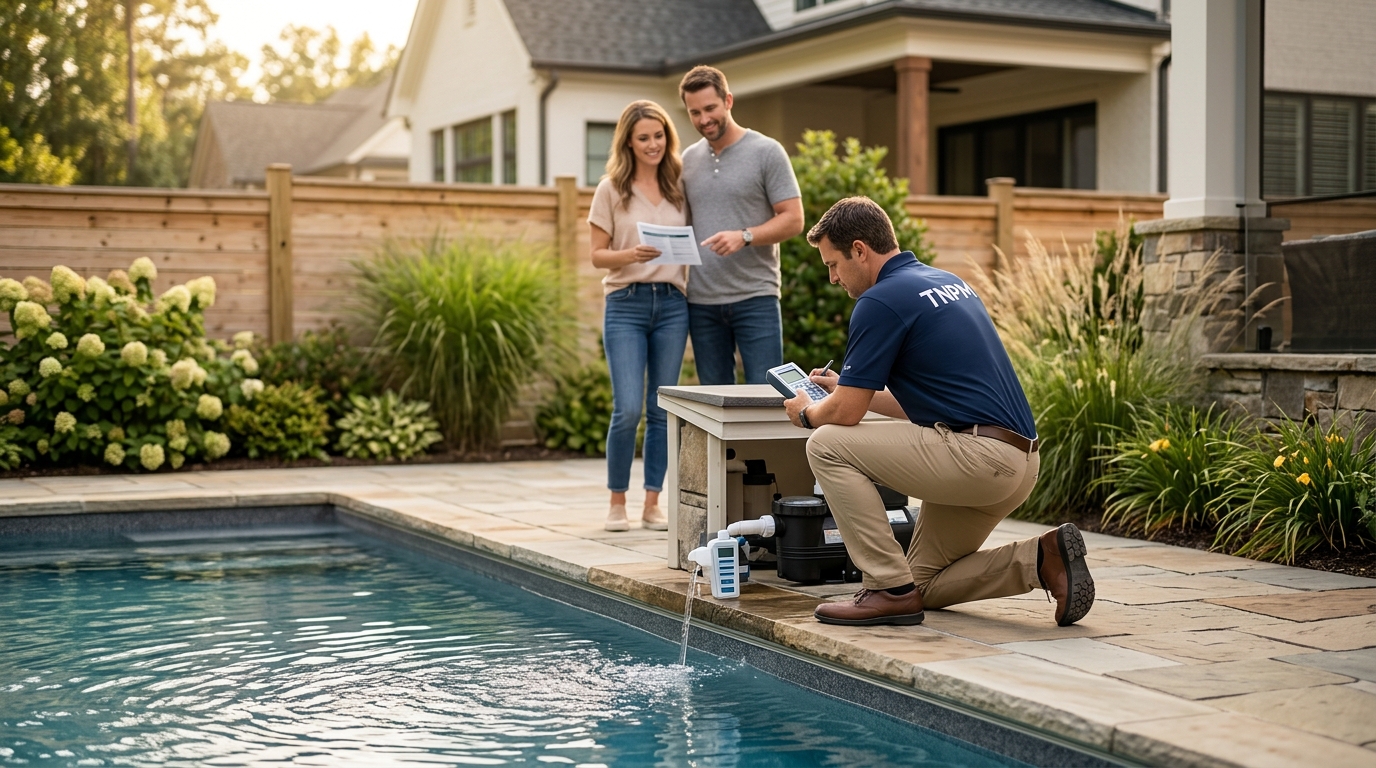
Before closing on a home with a pool, a certified swimming pool inspection is the process that evaluates structural integrity, equipment health, and safety compliance. This guide covers the essential steps, from understanding contract contingencies to verifying inspector credentials, ensuring you make an informed purchase decision.
Safety Compliance Standards
Pool safety is a legal and physical requirement that protects swimmers and limits liability for homeowners. In Georgia, local codes often mandate specific barrier heights and self-closing gates to prevent accidental drownings. A certified inspection verifies that these physical barriers meet current municipal and state regulations.
Barrier and Gate Verification
Inspectors check that fences are at least four feet high and that gates swing outward with self-latching mechanisms. They also ensure that the pool area is free of climbing aids, such as nearby furniture or trees, which could allow children to bypass the barrier.
Water Quality and Chemical Safety
Safety extends to the water itself. Inspectors test for proper chlorine levels, pH balance, and the absence of harmful bacteria. They also verify that chemical storage is secure and labeled, preventing accidental ingestion or exposure.
Contract Contingency Strategies
A pool inspection contingency is a clause in a real estate contract that allows the buyer to cancel the deal or request repairs based on the inspection results. This clause is critical because pools are complex systems that can hide expensive defects behind a clear surface.
Negotiating Repairs and Credits
If the inspection reveals issues like a cracked shell or a failing pump, buyers can negotiate for the seller to fix the problem before closing. Alternatively, buyers may request a price reduction or a closing credit to cover the cost of future repairs.
Understanding the Inspection Window
Most contracts provide a specific window, often 7 to 10 days, for the inspection to be completed. Buyers must schedule the certified pool inspection within this timeframe to maintain their contractual rights. Missing this deadline can waive the right to back out of the sale.
Key Inspection Components
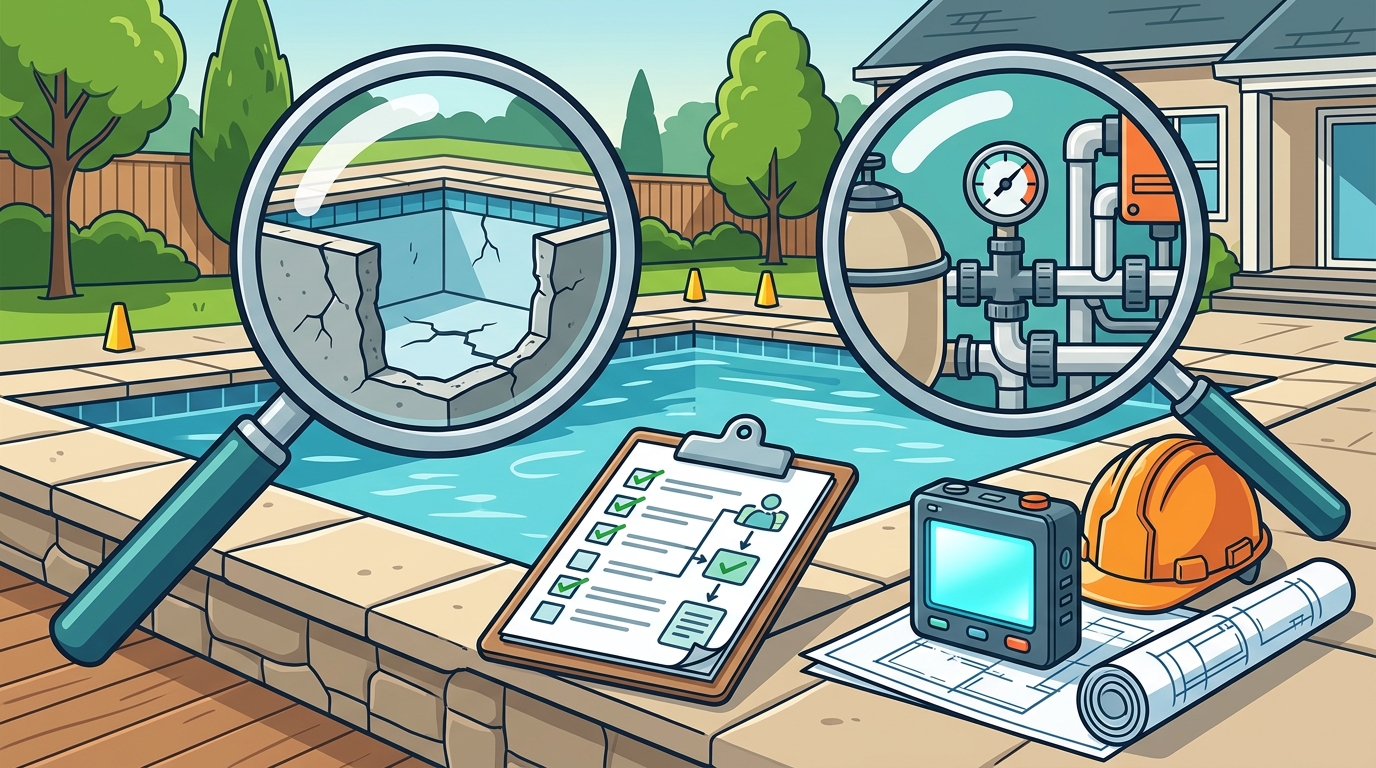
A comprehensive pool inspection evaluates the entire system, not just the water. The process is divided into structural, mechanical, and cosmetic components, each requiring specific technical knowledge to assess accurately.
Structural Integrity
Inspectors examine the pool shell for cracks, leaks, and surface deterioration. They check the coping, tile, and surrounding deck for signs of settling or water damage. Structural issues are often the most expensive to repair, making this a critical part of the evaluation.
Mechanical and Electrical Systems
The mechanical room houses the pump, filter, heater, and control panel. Inspectors test these components for proper operation, checking for unusual noises, leaks, and electrical faults. They also verify that the filtration system is cleaning the water effectively.
Plumbing and Drainage
Proper drainage is essential for pool longevity. Inspectors check the skimmer, main drain, and return lines for blockages or leaks. They also ensure that the pool area drains correctly to prevent water from pooling around the structure, which can cause foundation issues.
The Step-by-Step Inspection Process
The inspection process follows a logical sequence to ensure no component is overlooked. It begins with a visual assessment and moves to hands-on testing of the equipment.
Initial Visual Assessment
The inspector starts by walking the perimeter of the pool, noting the condition of the deck, fence, and landscaping. They observe the water clarity and check for any visible algae or debris. This initial scan helps identify obvious issues before detailed testing begins.
Equipment Testing and Diagnostics
The inspector turns on the pump and filter, listening for abnormal sounds and checking for pressure gauge readings. They test the heater and control panel to ensure all functions work correctly. Water samples are taken for chemical analysis, providing a snapshot of the current water balance.
Report Generation
After the on-site evaluation, the inspector compiles a detailed report. This document includes photos, descriptions of any defects, and recommendations for repairs. The report serves as the basis for negotiations with the seller and is a vital tool for the new homeowner.
Certified Inspector Credentials
Not all pool inspectors are created equal. Hiring a certified professional ensures that the inspection meets industry standards and provides reliable data. Credentials such as the Certified Pool Operator (CPO) designation indicate a high level of technical expertise.
Why Certification Matters
Certified inspectors undergo rigorous training in water chemistry, equipment repair, and safety regulations. They are required to maintain their knowledge through continuing education, ensuring they stay current with the latest codes and technologies. This expertise allows them to identify subtle issues that an untrained eye might miss.
Choosing the Right Inspector
When selecting an inspector, look for professionals with local experience and verifiable credentials. At Top Notch Pool Management, our team of CPO-certified technicians brings decades of local experience to every inspection. We understand the unique challenges of North Georgia pools, from seasonal pollen to fluctuating water chemistry.
Key Takeaways
- A certified pool inspection is a critical step in the homebuying process that protects your investment.
- Safety compliance checks ensure the pool meets local codes for barriers and water quality.
- Always include a pool inspection contingency in your real estate contract to protect your rights.
- The inspection covers structural integrity, mechanical systems, and plumbing drainage.
- Hire a CPO-certified inspector to ensure accurate and reliable results.
- Negotiate repairs or credits based on the findings in the inspection report.
- Local expertise is valuable, as regional conditions affect pool maintenance and longevity.
- Use the inspection report as a baseline for your future maintenance plan.
Frequently Asked Questions
How much does a certified pool inspection cost?
Can I skip the pool inspection if the seller provides a warranty?
No. A warranty may cover specific parts, but it does not guarantee the overall condition of the pool. An independent inspection provides an unbiased assessment of the entire system.
What happens if the inspection finds major defects?
You can use the inspection contingency to request repairs, a price reduction, or to cancel the contract. The specific options depend on the terms of your real estate agreement.
How long does a pool inspection take?
A thorough inspection typically takes 1 to 2 hours. The inspector needs time to test all equipment and document their findings.
Do I need to be present during the inspection?
It is not required, but it can be helpful. You can ask questions and observe the process, which may provide additional insights into the pool's condition.
What is the difference between a pool inspection and a pool cleaning?
A cleaning focuses on surface maintenance, while an inspection is a diagnostic evaluation of the pool's structural and mechanical health. An inspection is a one-time assessment, whereas cleaning is a recurring service.