
Certified Pool Inspections Before Buying a Home: The Complete Guide
Buying a home with a pool requires a certified pool inspection to verify structural integrity, equipment health, and safety compliance. This process protects buyers from costly repairs and ensures the water system meets local health codes. This guide covers the essential steps, from understanding contract contingencies to verifying inspector credentials, ensuring you make a fully informed purchase decision.
Safety Compliance Standards
Pool safety compliance is the adherence to local, state, and federal regulations designed to prevent drowning and ensure safe operation. In Georgia, the Department of Public Health sets strict guidelines for barrier fencing, gate self-closing mechanisms, and water quality parameters. A certified inspection verifies that these elements are present and functional before you finalize your purchase.
Non-compliance can result in failed inspections by local authorities, forcing the seller to make expensive corrections or voiding the sale. Top Notch Pool Management emphasizes that safety is not optional; it is a legal requirement. Inspectors check for proper barrier heights, gate latches, and anti-entrapment drain covers. These checks ensure the pool meets the standards required for a safe residential environment.
Contract Contingency Clauses
A pool inspection contingency is a clause in the real estate contract that allows the buyer to cancel the purchase or request repairs based on the inspection results. This provision protects your financial investment by making the sale conditional on the pool being in acceptable working order. Without this clause, you may be liable for all repair costs after closing.
When negotiating with a real estate agent, ensure the contingency specifies the scope of the inspection. It should cover structural elements, mechanical systems, and safety features. If the inspection reveals major issues, such as a cracked shell or failed pump, you can negotiate a price reduction or request that the seller complete the repairs. This step is critical for protecting your budget and ensuring the property value aligns with the condition of the amenities.
Key Inspection Components
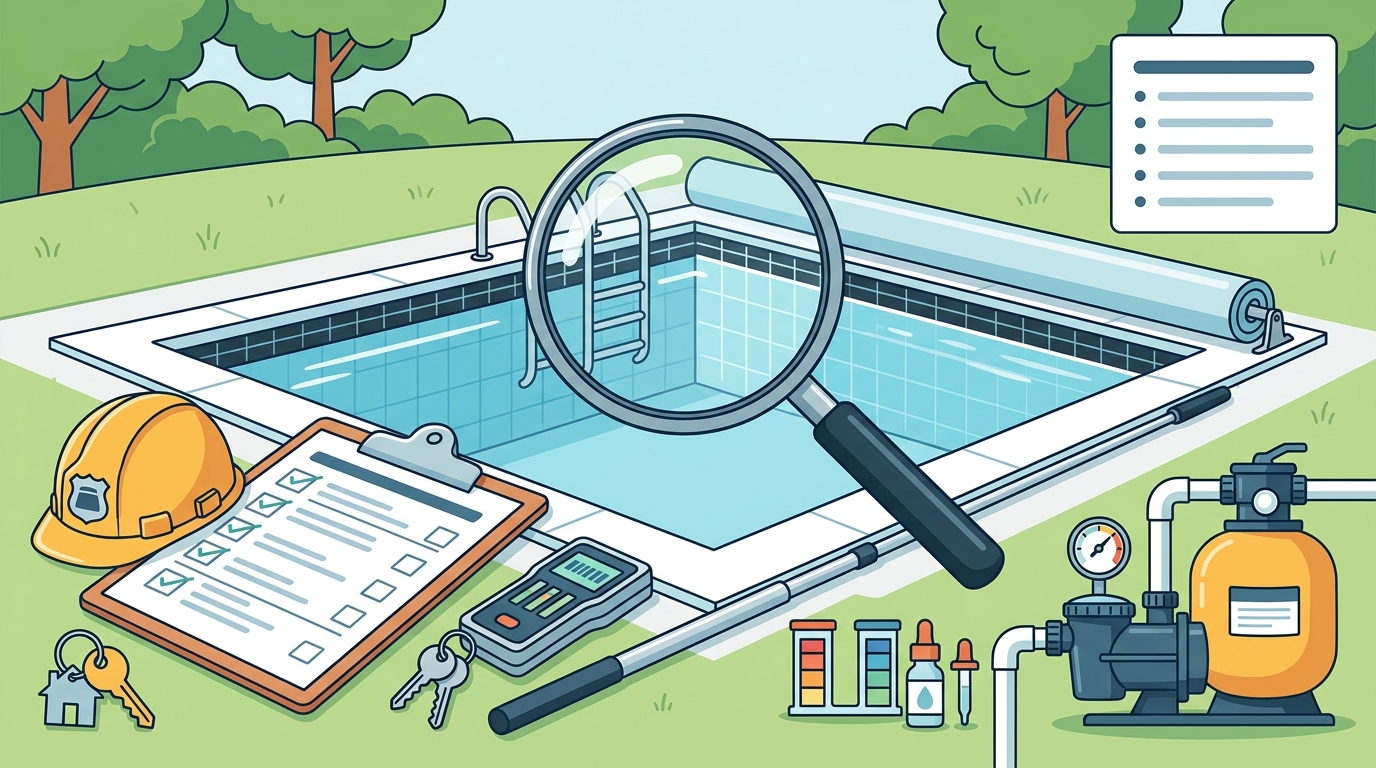
A comprehensive pool inspection evaluates multiple systems to determine the overall health of the facility. Each component requires specific technical knowledge to assess accurately. The following table outlines the primary areas examined during a certified inspection.
| Component | What is Checked | Common Issues |
|---|---|---|
| Structural Shell | Cracks, leaks, plaster condition | Spalling, hairline cracks, water loss |
| Plumbing System | Pipes, valves, skimmers, returns | Corrosion, leaks, clogged lines |
| Filtration System | Pump, filter, motor operation | Noisy operation, low flow, leaks |
| Electrical Systems | Lighting, GFCI outlets, wiring | Corrosion, faulty connections, tripping breakers |
| Safety Features | Fencing, gates, drain covers | Broken gates, missing covers, non-compliant barriers |
Structural Integrity
The pool shell is the foundation of the entire system. Inspectors look for signs of structural failure, such as cracks in the concrete or gunite surface. Water loss that exceeds normal evaporation rates is a primary indicator of a leak. Identifying these issues early prevents soil erosion and foundation damage to the home.
Mechanical Systems
Mechanical components, including pumps, filters, and heaters, are expensive to replace. The inspector tests these systems for proper flow rates, pressure, and noise levels. A pump that is running but not circulating water effectively indicates a failing impeller or motor. These diagnostics help estimate the remaining lifespan of the equipment.
Water Quality and Chemistry
Water chemistry reflects the overall maintenance history of the pool. High levels of calcium hardness or pH imbalance can indicate poor past care, which may lead to scale buildup or corrosion. While chemistry can be corrected, it provides insight into the seller's maintenance habits and the potential for hidden damage.
The Step-by-Step Inspection Process
The pool inspection process follows a logical sequence to ensure no system is overlooked. A professional inspector begins with a visual assessment and moves to detailed mechanical testing. This structured approach ensures a thorough evaluation of the pool's condition.
Initial Visual Assessment
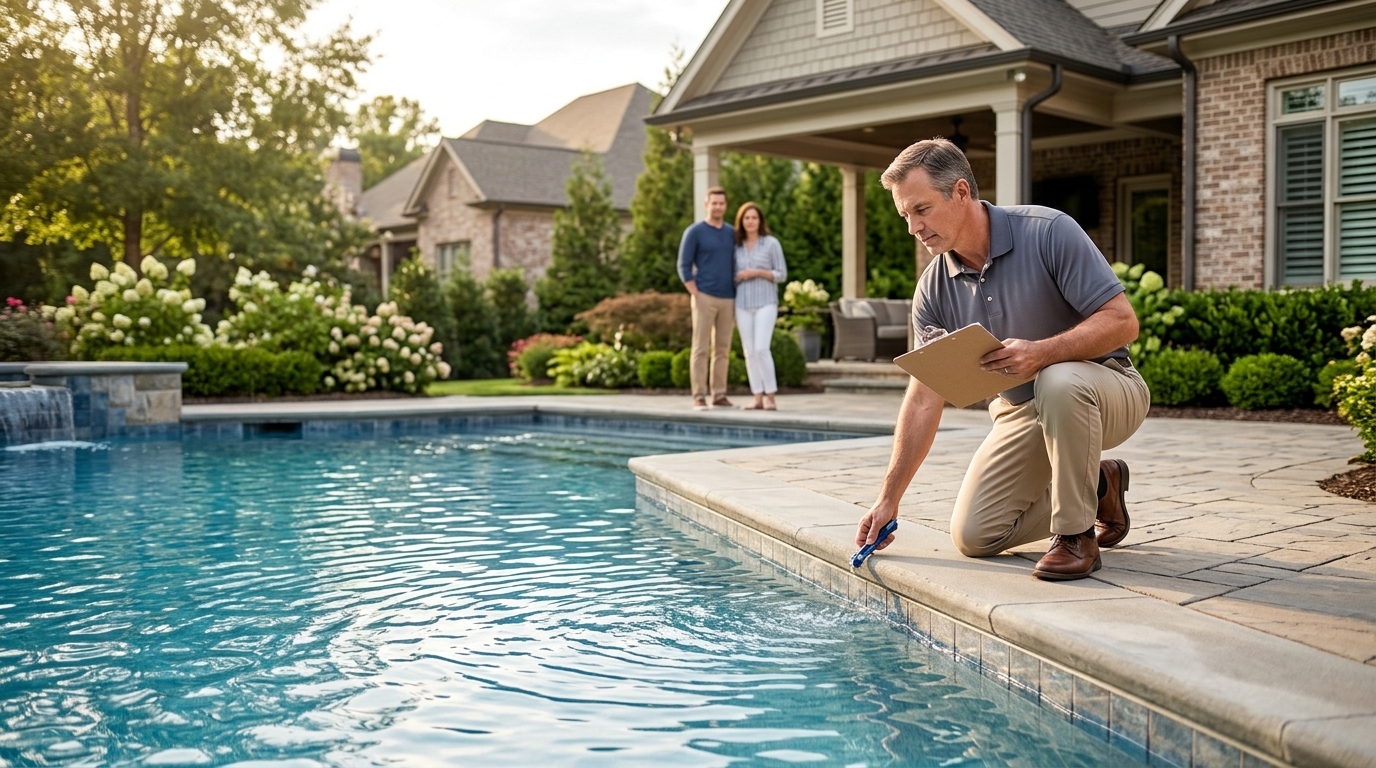
The inspector starts by walking the perimeter of the pool and deck. They look for visible cracks, loose tiles, and signs of water damage on the surrounding landscape. This initial scan helps identify obvious issues that may require immediate attention or further investigation.
Equipment Room Inspection
The equipment room houses the heart of the pool system. The inspector checks the pump, filter, heater, and control panel. They listen for unusual noises, check for leaks around connections, and verify that all switches and timers function correctly. This area is often where the most significant repair costs are found.
Water Testing and Analysis
Water samples are taken to test for pH, alkalinity, chlorine, and calcium hardness. These results help determine if the water is balanced and if the equipment is operating efficiently. Poor water chemistry can accelerate wear on seals and gaskets, leading to premature equipment failure.
Final Report and Recommendations
After completing the physical inspection, the inspector compiles a detailed report. This document includes photos of any issues found, a list of recommended repairs, and an estimate of the costs involved. The report serves as the basis for negotiations with the seller and helps you make an informed decision about the purchase.
Certified Inspector Credentials
Certified pool inspector credentials are the professional qualifications that verify an individual's expertise in pool systems and safety standards. In the industry, the most recognized certification is the Certified Pool Operator (CPO) credential. This certification ensures the inspector has the technical knowledge to diagnose complex issues accurately.
When hiring an inspector, verify their credentials and experience. A certified inspector understands the specific challenges of local water conditions and building codes. Top Notch Pool Management employs technicians who hold CPO and CMS certifications, ensuring that every inspection is conducted by a qualified professional. Choosing a certified inspector protects you from inaccurate assessments and ensures that all safety and compliance issues are identified.
Key Takeaways
- A certified pool inspection is essential for verifying the structural and mechanical health of a pool before purchase.
- Include a pool inspection contingency in your real estate contract to protect your financial investment.
- Safety compliance with local health codes is a legal requirement and must be verified during the inspection.
- Key inspection components include the structural shell, plumbing, filtration, electrical systems, and safety features.
- The inspection process follows a structured sequence from visual assessment to detailed mechanical testing.
- Verify that your inspector holds recognized credentials, such as the Certified Pool Operator (CPO) certification.
- Use the inspection report to negotiate repairs or price adjustments with the seller.
- Working with a local expert like Top Notch Pool Management ensures you receive accurate, region-specific advice.
Frequently Asked Questions
What is a certified pool inspection?
A certified pool inspection is a professional evaluation of a swimming pool's structural, mechanical, and safety systems conducted by a qualified technician. It verifies that the pool meets local codes and is in good working order before a home purchase is finalized.
Why is a pool inspection contingency important?
A pool inspection contingency allows the buyer to cancel the contract or request repairs if the inspection reveals significant issues. It protects the buyer from inheriting costly repair obligations after closing.
What does a pool inspector check?
An inspector checks the pool shell for cracks, tests the pump and filter for proper operation, inspects electrical systems for safety, and verifies that safety features like fencing and gates meet local codes.
How much does a pool inspection cost?
Costs vary by region and pool size, but a standard residential pool inspection typically ranges from a few hundred to over a thousand dollars. It is a small investment compared to the potential cost of major repairs.
Who should perform the inspection?
The inspection should be performed by a certified pool operator or a licensed pool service professional. Look for credentials such as the Certified Pool Operator (CPO) to ensure the inspector has the necessary expertise.
Can I negotiate repairs based on the inspection?
Yes, the inspection report provides a basis for negotiation. You can request that the seller complete recommended repairs, offer a credit for the estimated repair costs, or adjust the purchase price accordingly.
What if the pool fails the inspection?
If the pool fails the inspection, you can use the contingency clause to cancel the contract or negotiate with the seller. Major structural issues may make the pool too expensive to fix, affecting the overall value of the home.
Conclusion
Understanding the certified pool inspection process is crucial for any homebuyer in the North Atlanta region. By verifying safety compliance, utilizing contract contingencies, and hiring a qualified inspector, you protect your investment and ensure a safe swimming environment. Top Notch Pool Management provides the expertise and local knowledge you need to navigate this process with confidence. to schedule a professional pool inspection or learn more about our certified services.