
How Much Energy Can You Save by Fixing a Green Pool in Johns Creek?
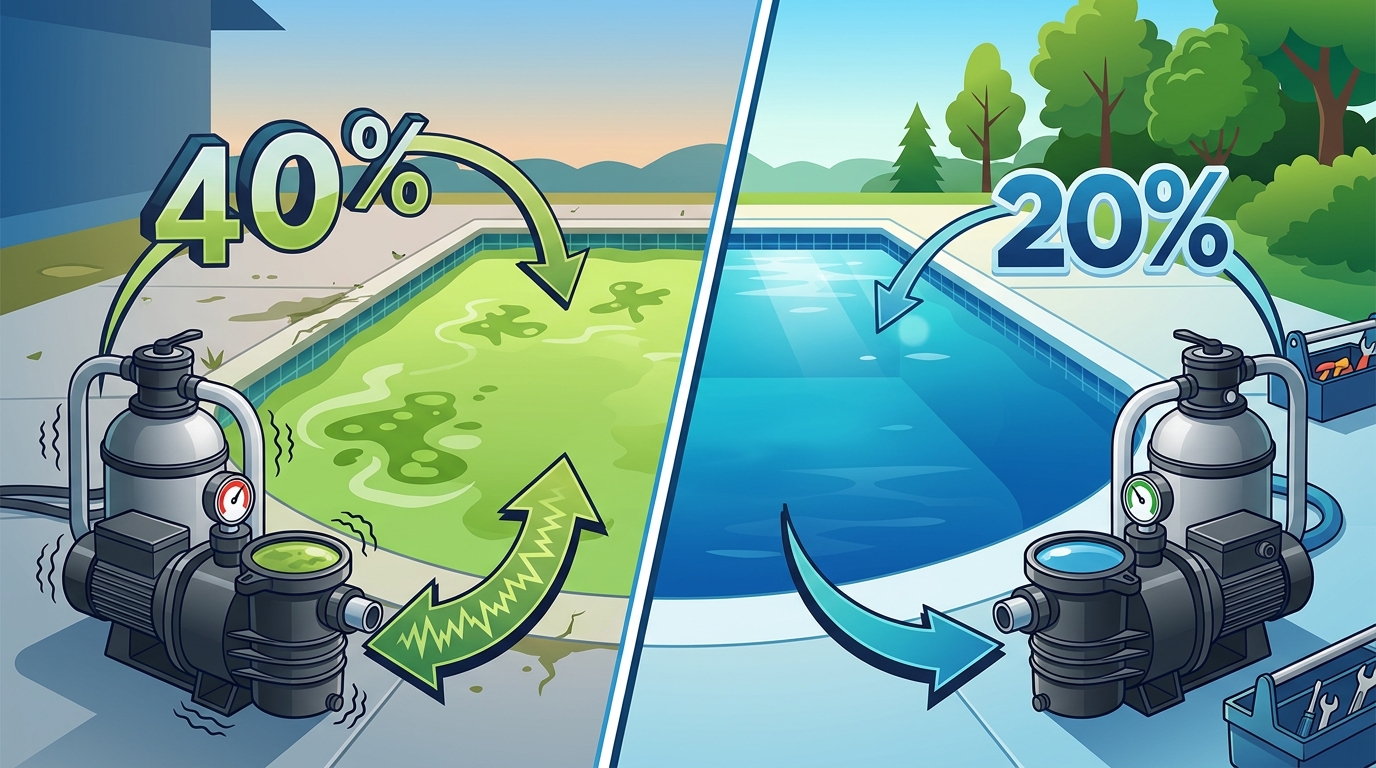
Fixing a green pool in Johns Creek can save 20% to 40% in energy costs by restoring proper circulation and filtration. When algae blooms, pumps run longer and harder to clear the water, driving up electricity bills. Restoring balance stops this waste immediately. Top Notch Pool Management specializes in resolving these issues efficiently for North Atlanta homeowners.
The Hidden Cost of Poor Circulation
Green water is a sign that your filtration system is working overtime. When debris and algae clog filters, the pump must run at higher pressures to move water. This increased mechanical load translates directly into higher kilowatt-hour consumption. A standard single-speed pump running continuously to fight green water uses significantly more power than one running on a normal schedule.
According to the U.S. Department of Energy, certified in-ground pool pumps use 20% less energy than standard pool pumps. However, even efficient pumps waste energy when fighting poor water chemistry. In Johns Creek, where pollen and tree debris are common, clogged filters are a frequent cause of energy spikes. Restoring clear water allows the pump to return to its optimal operating range, immediately reducing daily energy draw.
Equipment Strain and Efficiency Loss
Algae growth does not just affect water clarity; it strains every component of your pool system. Pumps, filters, and heaters all work harder when water is unbalanced. This strain reduces the overall efficiency of the equipment, meaning you pay more for the same level of performance. Over time, this constant overwork can lead to premature equipment failure, requiring expensive replacements that further impact your energy profile. according to Super Efficient Water
Top Notch Pool Management technicians in Johns Creek often find that pumps running against clogged filters consume 15% to 25% more electricity than necessary. By cleaning filters and balancing chemistry, we restore the system to its designed efficiency. This is not just about saving money on the electric bill; it is about extending the lifespan of your equipment. Efficient equipment runs cooler and lasts longer, providing consistent performance without the energy penalty of aging, strained parts.
Heater Performance and Water Clarity
Many Johns Creek homeowners use pool heaters to extend their swim season. Green or cloudy water significantly reduces heater efficiency. Heat transfer is less effective when water is opaque or contains high levels of particulate matter. Your heater must run longer to reach and maintain the desired temperature, burning more gas or electricity in the process.
Clear water allows for optimal heat exchange. When you fix a green pool, your heater can reach target temperatures faster and maintain them with less energy. For gas heaters, this means lower fuel consumption. For electric heat pumps, it means reduced runtime. The U.S. Department of Energy notes that energy-efficient systems can save hundreds of dollars annually compared to standard models. While this statistic applies to water heaters, the principle holds for pool heating: efficiency is maximized when the system is not fighting poor water quality. Clear water is the foundation of efficient heating. according to Heat Cool Efficiently
Long-Term Savings and System Health
The energy savings from fixing a green pool are not just immediate; they are cumulative. A pool that is consistently well-maintained requires less chemical treatment, which in turn reduces the workload on your filtration system. This creates a positive feedback loop where efficient operation becomes the norm rather than the exception. Homeowners who neglect their pools often face a cycle of reactive repairs, each of which adds to the energy burden.
Top Notch Pool Management offers weekly maintenance services that prevent green water before it starts. By keeping your pool balanced, we ensure that your equipment operates at peak efficiency year-round. This proactive approach saves energy and money. It also protects your investment. A well-maintained pool is a more efficient pool. The long-term savings can be substantial, especially for larger pools or those with high bather loads. Investing in professional care is an investment in energy efficiency.
Johns Creek Specific Factors
Johns Creek’s climate and environment present unique challenges for pool owners. The area’s heavy tree cover and seasonal pollen can quickly degrade water quality if not managed properly. These local factors mean that energy waste from poor maintenance is more common here than in other regions. Homeowners in Johns Creek need to be particularly vigilant about filter maintenance and chemical balancing to avoid energy spikes.
Top Notch Pool Management understands these local conditions. Our technicians are familiar with the specific challenges faced by Johns Creek pool owners. We tailor our services to address these issues, ensuring that your pool remains efficient and clear. By working with a local expert, you benefit from knowledge that is specific to your area. This localized expertise helps you maximize your energy savings and protect your pool investment.
Key Takeaways
- Fixing a green pool can save 20% to 40% in energy costs by restoring proper circulation.
- Clogged filters force pumps to work harder, increasing electricity consumption significantly.
- Clear water improves heater efficiency, reducing fuel or electricity usage for temperature control.
- Proper maintenance extends equipment lifespan, preventing costly replacements that impact energy profiles.
- Johns Creek’s local environment, including pollen and tree debris, makes regular filter maintenance critical.
- Professional weekly maintenance prevents green water before it starts, ensuring consistent energy efficiency.
- Top Notch Pool Management provides expert care tailored to North Atlanta conditions.
Frequently Asked Questions
How much energy does a pool pump use when fighting green water?
A pool pump fighting green water can use 15% to 25% more energy than when running normally. This is due to increased pressure from clogged filters and the need for longer runtime to clear the water.
Does clear water really affect heater efficiency?
Yes, clear water allows for better heat transfer. Opaque or cloudy water reduces the efficiency of heat exchange, forcing heaters to run longer and consume more energy to maintain temperature.
How often should I clean my pool filters to save energy?
Filters should be cleaned or backwashed every 1 to 2 weeks, depending on usage and local conditions. In Johns Creek, where pollen and tree debris are common, more frequent cleaning may be necessary to maintain efficiency.
Can professional maintenance save me money on energy bills?
Yes, professional maintenance ensures that your pool system operates at peak efficiency. By preventing issues like green water and clogged filters, you reduce the energy required to maintain your pool, leading to lower utility bills.
What is the best way to prevent green water in Johns Creek?
The best way to prevent green water is through consistent chemical balancing and regular filter maintenance. Top Notch Pool Management offers weekly services that address these factors, keeping your pool clear and efficient.
Conclusion
Fixing a green pool in Johns Creek is a direct path to significant energy savings. By restoring proper circulation and filtration, you reduce the workload on your pumps and heaters, lowering your utility bills. Top Notch Pool Management provides the expertise and local knowledge needed to keep your pool efficient and clear. Contact us today to schedule a service visit and start saving energy.