
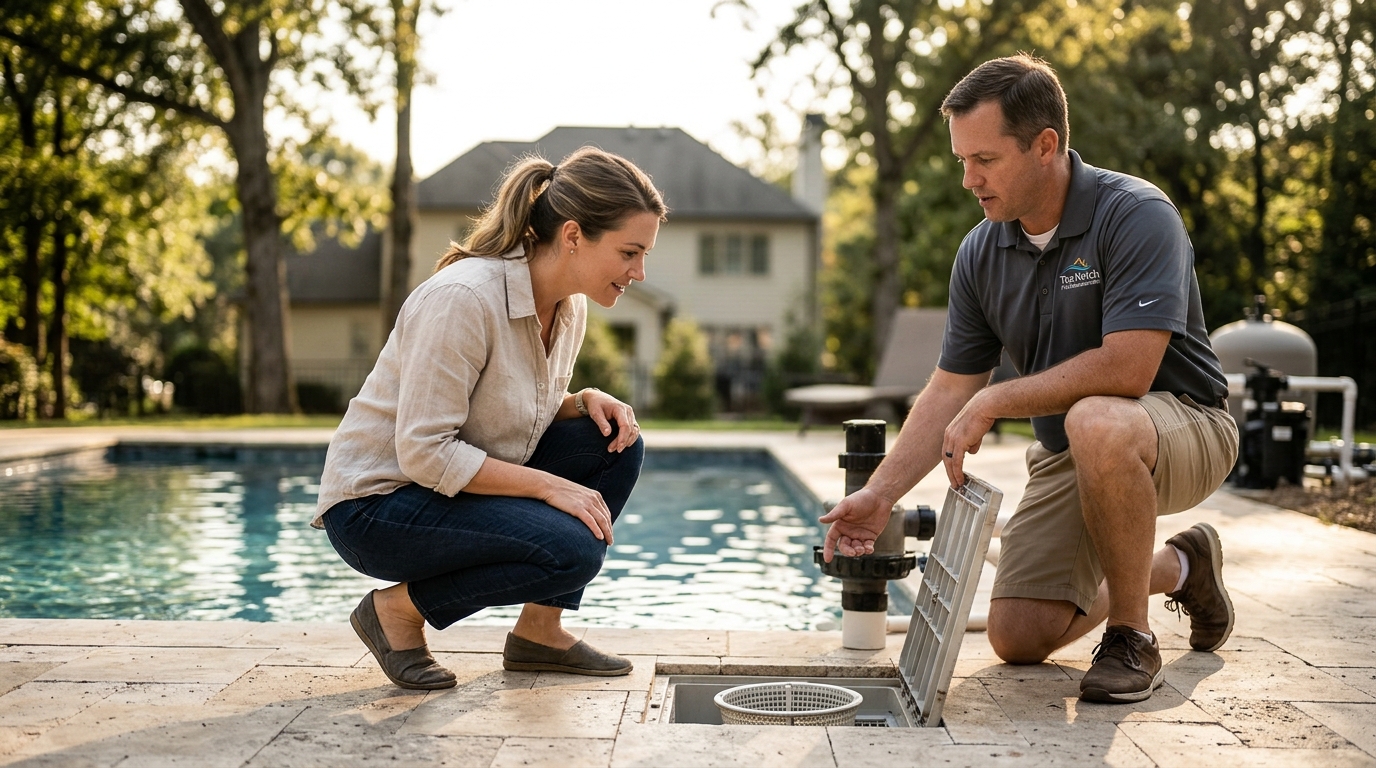
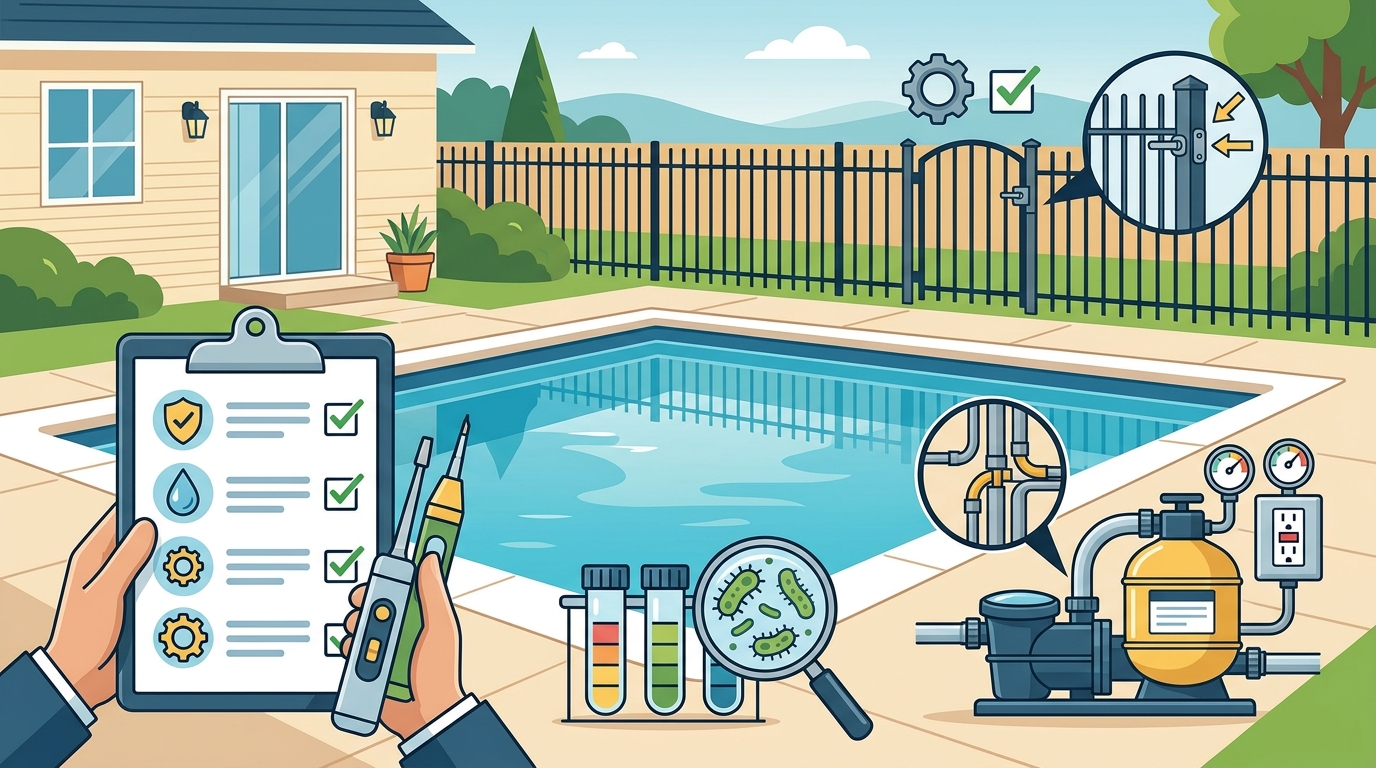
Georgia pre-purchase pool inspections focus on barrier compliance, water chemistry, and equipment safety. Inspectors verify that fences, gates, and self-closing mechanisms meet state codes. They also test water for harmful bacteria and ensure pumps and filters operate without electrical hazards. Top Notch Pool Management helps buyers understand these critical safety standards before closing on a home.
Barrier and Access Control Standards
Georgia state law requires specific barrier systems to prevent accidental drownings, particularly for children. A compliant pool barrier is a physical structure that restricts access to the pool area. Inspectors check that fences are at least four feet high and that gates are self-closing and self-latching. The latch must be positioned high enough that a small child cannot reach it. This ensures that the pool area remains secure even when adults are distracted.
For homes with direct access from a house to the pool, additional safety measures are often required. Inspectors look for alarm systems on doors leading to the pool. These alarms must activate when a door opens to prevent unnoticed entry. Buyers should verify that these systems are functional and properly installed. Non-compliant barriers can result in failed inspections and costly retrofits after purchase.
Water Chemistry and Quality Testing
Water quality is a primary safety concern during any pool inspection. Proper water chemistry is the balance of pH, alkalinity, and sanitizer levels that prevents biological growth. Inspectors test for chlorine, bromine, or other sanitizers to ensure the water is safe for human contact. They also check for the presence of harmful bacteria like E. coli or Pseudomonas. High levels of these pathogens indicate poor maintenance and potential health risks for new owners. according to Pool Program
Alkalinity and pH levels must fall within specific ranges to prevent eye irritation and skin reactions. If the water is too acidic, it can corrode equipment and cause discomfort. If it is too basic, it reduces the effectiveness of sanitizers. Buyers should request a recent water test report from the seller. Top Notch Pool Management provides detailed water quality assessments that highlight any immediate chemical imbalances.
Electrical and Equipment Safety Checks
Pool equipment involves high-voltage systems that require strict safety protocols. A ground fault circuit interrupter (GFCI) is a safety device that shuts off power when it detects a current leak. Inspectors verify that all pool lights, pumps, and heaters are connected to GFCI-protected outlets. They also check for proper grounding of metal components to prevent shock hazards. Faulty wiring or missing GFCI protection is a critical safety violation that must be addressed before closing.
Equipment enclosures must be secure and dry to prevent water intrusion. Inspectors examine pump rooms and electrical panels for signs of moisture or corrosion. They ensure that all components are accessible for maintenance but protected from accidental contact. Buyers should note any equipment that appears outdated or damaged. Replacing old electrical systems can be expensive, so identifying these issues early is crucial for budget planning.
Structural Integrity and Surface Safety
The physical structure of the pool must be sound to prevent accidents. A structurally sound pool is one where the shell, coping, and deck are free from cracks or instability. Inspectors look for cracks in the plaster or concrete that could lead to leaks or structural failure. They also examine the deck surface for trip hazards, such as loose pavers or uneven joints. Smooth, non-slip surfaces are essential for preventing falls around the pool area.
Coping and tile lines must be intact to prevent water from seeping into the structure. Cracked tiles or loose coping can create sharp edges and allow water to erode the foundation. Buyers should inspect the pool shell for any signs of movement or settling. Structural issues are often hidden, so a professional inspection is vital. Top Notch Pool Management evaluates the overall condition of the pool structure to identify potential long-term risks.
Documentation and Compliance Verification
Proper documentation is a key part of the inspection process. A compliance certificate is a document that verifies the pool meets all local and state safety codes. Inspectors review permits, inspection records, and maintenance logs to ensure the pool has been legally maintained. They check for any outstanding violations or required repairs that the seller has not addressed. Buyers should request copies of all inspection reports and permits before finalizing the purchase.
Local jurisdictions may have additional requirements beyond state law. Inspectors verify that the pool complies with specific municipal codes. This includes signage, safety equipment, and barrier specifications. Buyers should be aware that some older pools may not meet current standards. Retrofitting these pools can be a significant expense. Understanding the compliance status helps buyers negotiate repairs or price adjustments with the seller.
Key Takeaways
- Georgia law mandates specific barrier heights and self-closing gates to prevent accidental drownings.
- Water chemistry tests must confirm safe sanitizer levels and the absence of harmful bacteria.
- All electrical components must be protected by GFCI outlets and properly grounded.
- Structural inspections check for cracks, leaks, and trip hazards on the deck and shell.
- Buyers should review all permits and compliance certificates to verify legal maintenance history.
- Non-compliant features often require costly retrofits, so early detection is critical.
Frequently Asked Questions
What is the most common safety violation in Georgia pools?
The most common violation is non-compliant fencing or gate mechanisms. Gates that do not self-close or self-latch are frequent issues. Inspectors flag these immediately because they pose a direct safety risk.
Do I need a professional inspection if the seller provides a report?
Yes, you should always hire an independent professional. Seller-provided reports may be outdated or biased. An independent inspector provides an unbiased assessment of the current safety status.
What happens if the pool fails the safety inspection?
If the pool fails, the seller is typically required to make repairs before closing. You can also negotiate a price reduction or request a credit for the cost of repairs. In some cases, you may choose to walk away from the deal.
Are there specific rules for pool covers?
How much does a pre-purchase pool inspection cost?
Costs vary by region and pool size, but most inspections range from a few hundred to over a thousand dollars. Top Notch Pool Management offers competitive rates for comprehensive safety assessments.
Can I use the pool during the inspection?
No, the pool should be drained or closed for a thorough structural inspection. For water quality tests, the pool must be filled and circulating. Inspectors will guide you on the necessary preparation steps.
What is a GFCI outlet and why is it important?
A GFCI outlet is a safety device that cuts power during a current leak. It is critical for preventing electrocution in wet environments. All pool equipment must be connected to GFCI-protected circuits.
Ensure Your Pool is Safe Before You Buy
Understanding safety regulations is essential for a confident home purchase. Top Notch Pool Management provides expert pre-purchase inspections that cover barriers, water quality, and electrical safety. Our certified technicians help you identify potential risks before you sign the closing documents. to schedule a comprehensive safety assessment for your prospective property.