
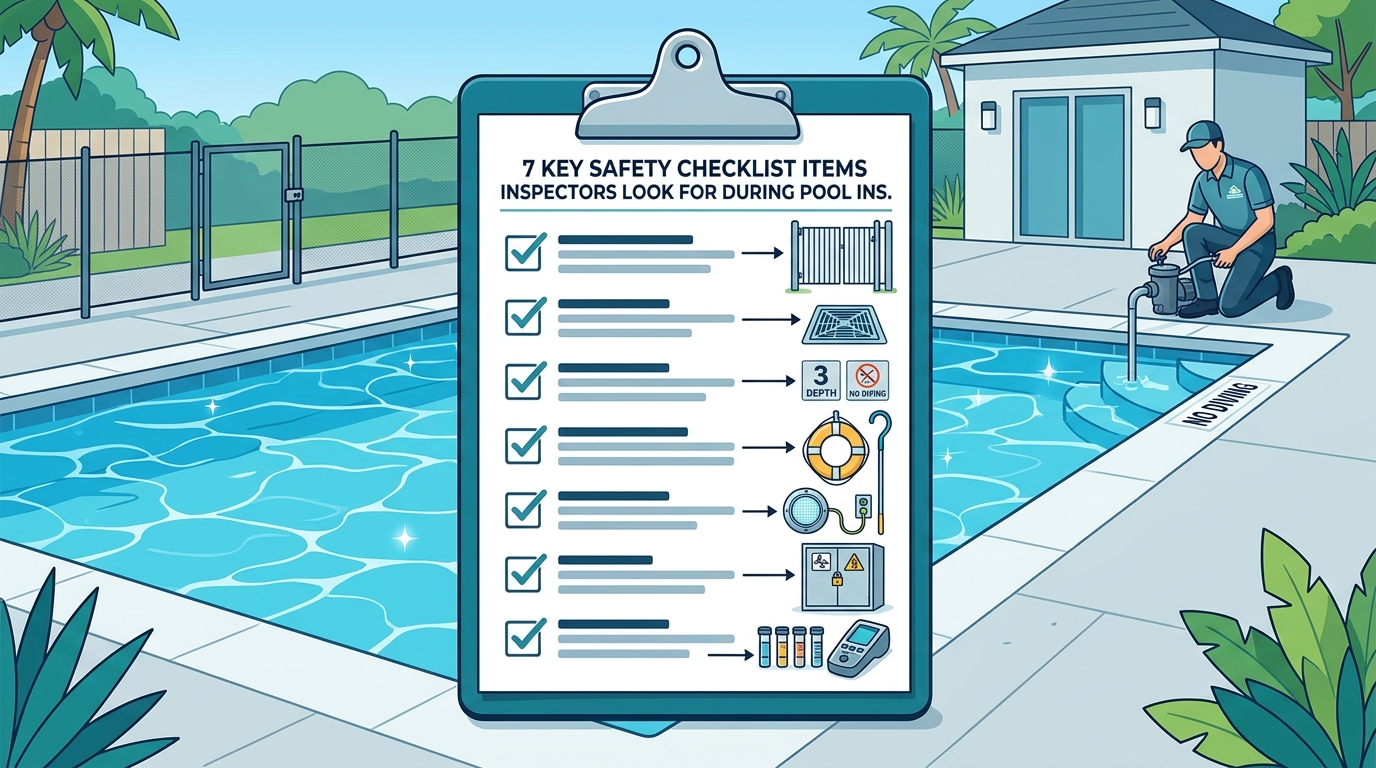
7 Key Safety Checklist Items Inspectors Look for During Pool Inspections
Pool safety inspections are formal evaluations designed to verify that a swimming facility meets local health codes and operational standards. Inspectors focus on preventing drowning, chemical exposure, and equipment failure. Top Notch Pool Management helps property owners in Alpharetta and Roswell maintain compliance by addressing these critical safety checkpoints before official inspections occur.
1. Barrier and Gate Integrity
Barriers must prevent unauthorized access to the pool area. Inspectors verify that fences, gates, and walls meet height and spacing requirements. Self-closing and self-latching mechanisms are critical for residential pools. Any gap or broken latch can result in an immediate failure of the safety inspection.
2. Water Chemistry and Clarity
Water must be chemically balanced and visually clear. Inspectors test for pH, alkalinity, and chlorine levels to ensure the water is safe for swimmers. Cloudy or green water indicates a failure in filtration or chemical management. Proper balance prevents skin irritation and protects the pool structure from corrosion.
3. Safety Equipment Availability
Required rescue equipment must be present and accessible. Checklists typically demand a life ring, shepherd's crook, and first aid kit. These items must be in good condition and easily reachable from the pool deck. Inspectors verify that equipment is not stored in locked cabinets or obstructed by furniture.
4. Signage and Depth Markers
Clear signage communicates depth and safety rules to users. Depth markers must be visible from the water surface and the deck. Warning signs for diving, no lifeguard, and emergency procedures are mandatory. Faded or missing signs are a common reason for inspection citations.
5. Pump Room and Equipment Safety
Mechanical rooms must be secure and hazard-free. Inspectors check for proper ventilation, dry floors, and locked doors. Electrical panels must be accessible and free of debris. A secure pump room prevents accidental injury and ensures the filtration system operates safely.
6. Drain Covers and Anti-Entanglement
Drain covers must comply with anti-entrapment standards. Modern codes require specific grate designs to prevent suction entrapment. Inspectors verify that drain covers are intact, properly installed, and meet current safety regulations. Old or damaged covers pose a severe risk to swimmers.
7. Operational Records and Logs
Maintenance logs must document daily water testing and equipment checks. Inspectors review records to ensure consistent monitoring of water quality. Missing entries or gaps in data suggest neglect and can lead to fines. Accurate logs demonstrate a commitment to ongoing safety and compliance.
Choosing the Right Inspection Approach
When preparing for an inspection, prioritize the items that pose the highest immediate risk to human safety. Barriers and water chemistry are the most critical factors. If you are unsure about your pool's compliance status, a professional pre-inspection can identify gaps before an official visit. Top Notch Pool Management provides certified technicians who understand local codes and can help you maintain a safe, compliant pool year-round.
Frequently Asked Questions
How often should a pool be inspected for safety?
Residential pools should be checked weekly by the owner, while commercial pools require daily inspections. Official health department inspections vary by locality but typically occur annually or upon request.
What happens if a pool fails a safety inspection?
The facility may be required to close until violations are corrected. Fines can be issued for non-compliance. Correcting issues promptly is essential to avoid prolonged closures.
Do inspectors check the pool filter system?
Yes, inspectors verify that the filtration system is operating correctly and that the pump room is safe. They may also check for leaks or unusual noises that indicate mechanical failure.
Is a professional inspection required for home pools?
While not always legally mandated for private homes, a professional inspection is highly recommended before selling a property or after significant renovations. It ensures all safety features are functioning correctly.
How can I prepare my pool for an official inspection?
Conduct a thorough self-audit using a safety checklist. Ensure all equipment is working, signs are visible, and maintenance logs are up to date. Hiring a certified pool service provider can help identify and fix issues early.