
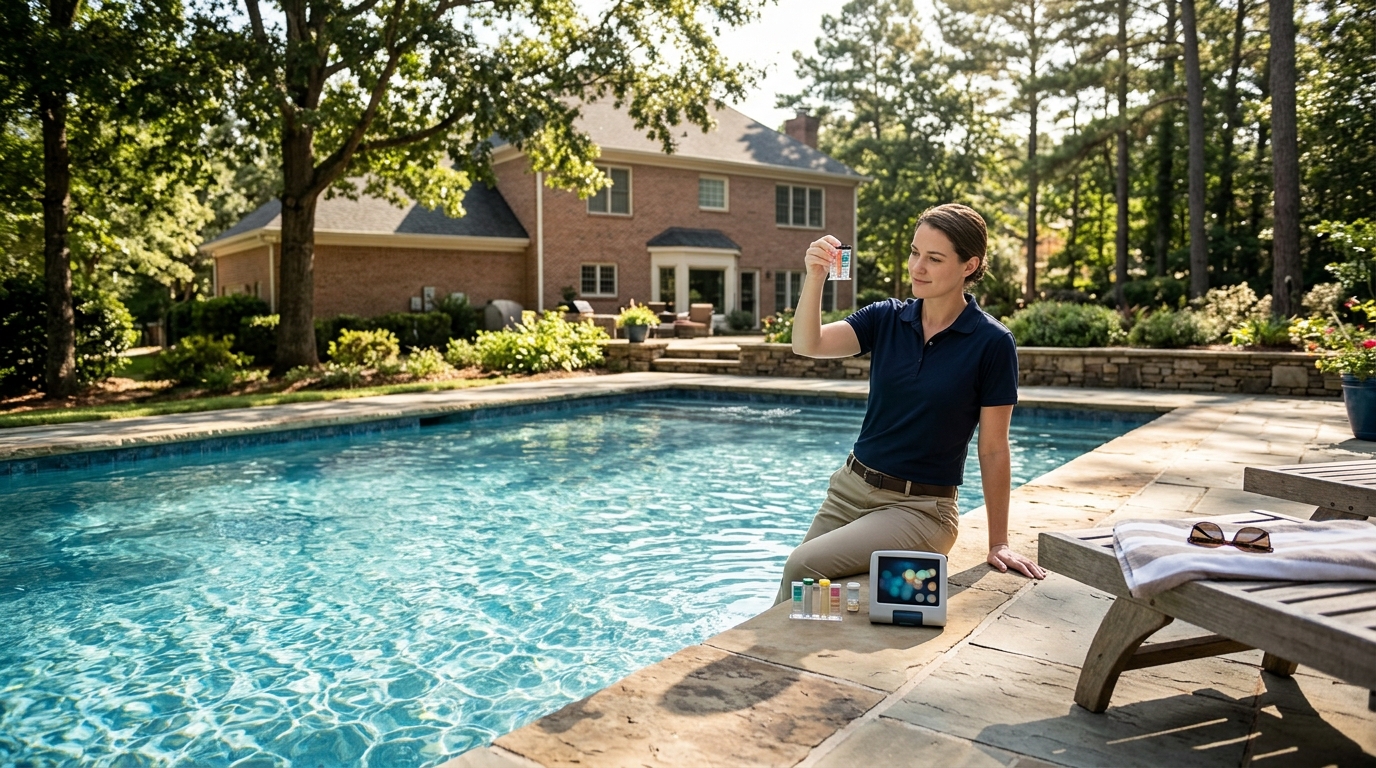
Proper pH balancing for Alpharetta pools involves maintaining a stable range of 7.2 to 7.6 while adjusting for seasonal temperature and rainfall shifts. Top Notch Pool Management recommends consistent weekly testing to prevent equipment corrosion and ensure swimmer comfort. This approach protects your investment and keeps water crystal clear throughout the year.
Understanding the Ideal pH Range
Pool pH is a measure of how acidic or basic the water is. The ideal range for most residential pools is between 7.2 and 7.6. When pH levels fall below 7.0, the water becomes acidic, which can irritate swimmers' eyes and corrode metal equipment. When levels rise above 7.8, the water becomes basic, leading to cloudy water and reduced chlorine effectiveness. Maintaining this narrow window is the foundation of healthy pool water.
Spring: Managing Rain and Pollen
Spring in Alpharetta brings heavy rainfall and high pollen counts, which significantly impact water chemistry. Rainwater is naturally acidic and can lower your pool's pH rapidly. Additionally, pollen and organic debris introduce phosphates that can destabilize the water. During this season, frequent testing is essential to counteract these external factors. Top Notch Pool Management technicians monitor these shifts closely to keep your pool balanced before algae can take hold.
Summer: Heat and Bather Load
Summer heat accelerates chemical reactions and increases bather load, both of which affect pH stability. Higher temperatures cause chlorine to dissipate faster, which can indirectly influence pH levels. Furthermore, sweat and sunscreen from swimmers introduce organic matter that raises pH. In North Atlanta, where summer humidity is high, evaporation also concentrates minerals in the water. Regular weekly service helps manage these variables, ensuring the water remains safe and clear despite heavy usage.
Fall: Debris and Temperature Drops
As temperatures cool in fall, falling leaves and pine needles become a major challenge for Alpharetta pool owners. This organic debris decomposes in the water, releasing acids that lower pH levels. The drop in temperature also slows down chemical reactions, making it harder to maintain balance. Proper fall maintenance involves not just cleaning debris but also adjusting chemical dosages to match the slower water chemistry. This proactive approach prevents the water from becoming acidic and damaging your pool surfaces.
Winter: Protecting Equipment and Surfaces
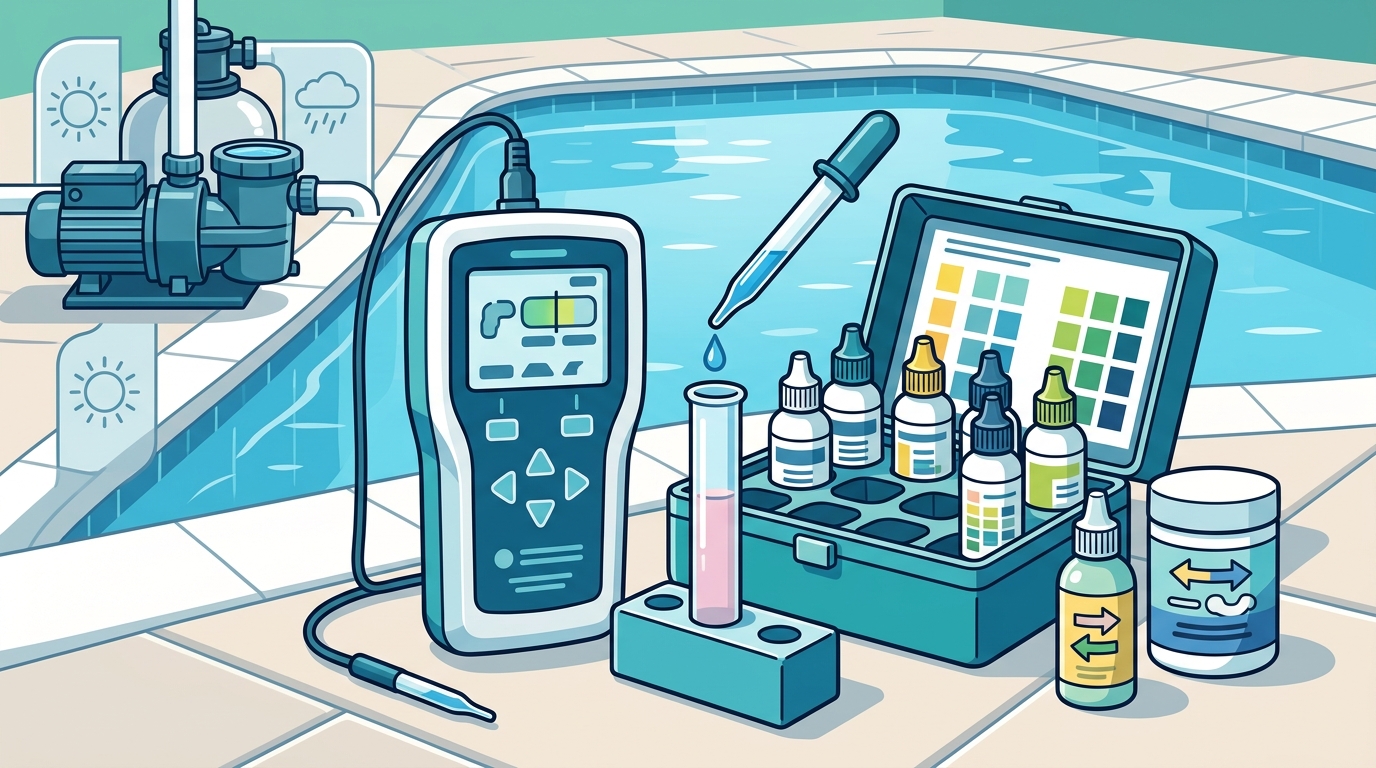
Winter in Georgia is mild, but freezing temperatures can still pose risks to pool equipment. Cold water is more acidic, which can lead to corrosion of pumps, heaters, and plumbing if not properly managed. Even if the pool is not in use, maintaining a stable pH is crucial to protect the investment. Top Notch Pool Management advises keeping the water balanced during the off-season to prevent long-term damage. This ensures the pool is ready for a smooth opening in the spring.
Key Takeaways
- Maintain pH between 7.2 and 7.6 for optimal water quality.
- Spring rain and pollen require frequent testing to counteract acidity.
- Summer heat and bather load increase the need for consistent chemical adjustment.
- Fall debris decomposition lowers pH, requiring proactive chemical management.
- Winter cold water is more acidic, posing corrosion risks to equipment.
- Weekly professional service ensures consistent balance throughout the year.
Frequently Asked Questions
What is the ideal pH range for a pool?
The ideal pH range for a pool is between 7.2 and 7.6. This range ensures that chlorine works effectively and that the water is comfortable for swimmers.
How often should I test my pool's pH?
You should test your pool's pH at least twice a week, or more frequently during heavy rain or high usage periods. Weekly professional service ensures consistent monitoring.
Why does rain lower my pool's pH?
Rainwater is naturally acidic, with a pH of around 5.0 to 6.0. When it enters your pool, it dilutes the water and lowers the overall pH level.
What happens if my pool's pH is too high?
If the pH is too high, the water becomes basic, leading to cloudy water, scale formation, and reduced chlorine effectiveness. This can also cause skin and eye irritation.
How does temperature affect pH balance?
Higher temperatures accelerate chemical reactions and can cause pH to fluctuate more rapidly. Cold water is more acidic, which can lead to corrosion if not managed properly.
Can I balance my pool's pH myself?
Yes, but it requires consistent testing and accurate chemical dosing. Professional service ensures that adjustments are made correctly and safely, preventing long-term damage.
Conclusion
Maintaining proper pH balance is a year-round commitment for Alpharetta pool owners. By understanding how seasonal changes affect water chemistry, you can protect your pool and enjoy clear, safe water all year. Top Notch Pool Management provides the expertise and consistent service needed to keep your pool in perfect condition. Contact us today to schedule your weekly pool care.