

What Does Balanced Pool Water Chemistry Actually Require Each Week?
Balanced pool water chemistry requires weekly testing and precise adjustment of pH, alkalinity, calcium hardness, and sanitizer levels. In the Metro Atlanta region, seasonal shifts in temperature and rainfall make consistent monitoring essential to prevent algae and equipment damage. Top Notch Pool Management emphasizes that skipping even a single week of chemical balancing can lead to cloudy water and costly repairs.
The Core Parameters of Weekly Water Testing
Water balance is the state where chemical levels remain within safe and effective ranges for swimmers and equipment. The four primary parameters you must check every week are pH, total alkalinity, calcium hardness, and free chlorine. pH measures how acidic or basic the water is, and it should ideally stay between 7.2 and 7.8. If the pH drifts too high, chlorine becomes less effective at killing bacteria. If it drops too low, the water becomes corrosive to your pool surfaces and metal parts.
Total alkalinity acts as a buffer for pH, preventing rapid swings that can shock the system. Calcium hardness ensures the water is not too aggressive toward plaster or too saturated to form scale. Free chlorine is the primary sanitizer that keeps the water clear and safe. By testing these four elements weekly, you create a stable environment that protects your investment and ensures a pleasant swimming experience.
How Georgia Weather Impacts Chemical Stability
The Metro Atlanta climate presents unique challenges for pool owners. Heavy pollen seasons and frequent summer storms introduce organic matter and dilute chemical concentrations. When rain falls, it can lower the pH and wash away chlorine, requiring immediate re-balancing. High summer temperatures accelerate the evaporation of chlorine, meaning your sanitizer levels drop faster than in cooler climates. This is why a static chemical schedule often fails in Georgia; the environment is constantly changing.
Top Notch Pool Management technicians account for these local variables by adjusting dosages based on real-time conditions rather than a fixed calendar. For example, after a heavy rainstorm in Alpharetta, a pool may require a significant pH adjustment and a chlorine boost within 24 hours. Ignoring these weather-driven shifts leads to the common issues of green water and equipment corrosion. Understanding that weather is a chemical variable helps you prioritize your weekly testing routine.
The Role of Sanitizers in Weekly Maintenance
Sanitization is the process of using chemicals to destroy harmful microorganisms in the water. Free chlorine is the most common sanitizer, but its effectiveness is directly tied to the pH level. At a pH of 7.8, only about 50% of your chlorine is active as hypochlorous acid, the form that actually kills pathogens. At a pH of 7.2, that active percentage rises significantly. This relationship means that balancing pH is not just a comfort issue; it is a safety requirement. Weekly testing ensures you are not over-chlorinating, which can irritate skin and eyes, or under-chlorinating, which allows algae to take hold.
Some pool owners use saltwater systems, which generate chlorine from salt. Even with salt systems, you must monitor the generated chlorine levels weekly. The generator may not keep up with high bather loads or intense sunlight. Consistent testing allows you to adjust the generator output or add supplemental chlorine as needed. This proactive approach prevents the sudden algae blooms that often occur when a system fails to maintain adequate sanitizer levels during peak summer use.
Preventing Scale and Corrosion Through Hardness Control
Calcium hardness is the concentration of dissolved calcium in the water. It is a critical component of water balance because it determines whether the water is corrosive or scale-forming. If calcium hardness is too low, the water will leach calcium from your plaster, grout, and equipment, leading to pitting and etching. If it is too high, the water will deposit calcium scale on the pool walls, lights, and plumbing. Weekly monitoring allows you to catch these trends before they become visible damage. A single week of high hardness might not cause immediate issues, but over a month, it can lead to significant scaling that requires professional resurfacing.
Top Notch Pool Management provides personalized service summaries that track these trends over time. By reviewing the data from each weekly visit, you can see if your calcium hardness is drifting upward or downward. This data-driven approach allows for small, corrective adjustments rather than large, disruptive chemical shocks. Maintaining calcium hardness within the recommended range of 200 to 400 ppm is essential for the longevity of your pool structure. It is a silent but powerful factor in the overall health of your pool.
Key Takeaways for Weekly Pool Care
- Test pH, alkalinity, calcium hardness, and free chlorine every week without fail.
- Adjust pH first, as it directly impacts the effectiveness of your sanitizer.
- Account for local weather, such as rain and heat, when interpreting test results.
- Monitor calcium hardness to prevent both scale formation and surface corrosion.
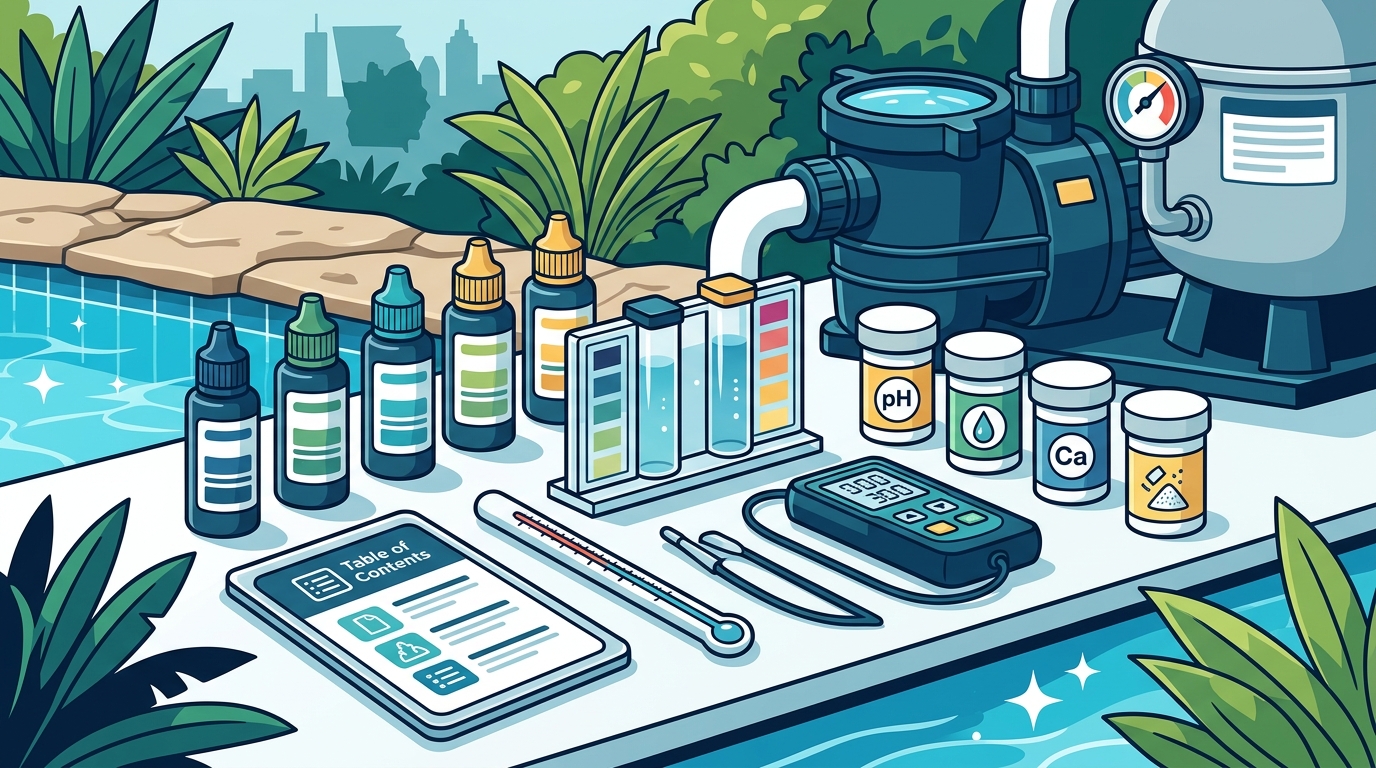
- Use a consistent testing method, such as digital meters or liquid test kits, for accuracy.
- Keep a log of your chemical additions to identify trends and adjust dosages over time.
Frequently Asked Questions
How often should I test my pool water?
You should test your pool water at least once a week. During periods of heavy use or extreme weather, testing twice a week is recommended to maintain stability.
What is the ideal pH range for a pool?
The ideal pH range for a swimming pool is between 7.2 and 7.8. This range ensures that chlorine is most effective and that the water is comfortable for swimmers.
Does rain affect pool chemistry?
Yes, rain can dilute chemicals and lower the pH. It also introduces organic matter that consumes chlorine. You should test and adjust your water after any significant rainfall.
What happens if my calcium hardness is too high?
If calcium hardness is too high, the water will form scale on the pool surfaces and equipment. This can lead to rough textures, clogged filters, and reduced water flow.
Can I use a saltwater system without testing?
No, saltwater systems still require regular testing. You need to monitor the generated chlorine levels and pH to ensure the system is operating correctly and the water is safe.
How do I know if my water is balanced?
Your water is balanced when all chemical levels are within their recommended ranges and the water is clear, odorless, and comfortable to swim in. Consistent weekly testing is the best way to verify this.
Conclusion
Achieving balanced pool water chemistry is a weekly commitment that requires attention to detail and an understanding of local environmental factors. By consistently testing and adjusting pH, alkalinity, calcium hardness, and sanitizer levels, you protect your pool from damage and ensure a safe swimming environment. Top Notch Pool Management is dedicated to helping homeowners in Alpharetta and the surrounding North Atlanta region maintain this balance with professional, certified care. To ensure your pool water stays perfectly balanced all season long, to schedule a service visit.